🎵
Artist: Yes

The Yes Album

🏷️ Rock 📅 1970 💿 R ⭐ ****

Field
Rock
Recorded
1970
Label
Atlantic
Pressing
Aus
Rating
****
Discs
1
Media
R
Bought
01-Jan-1900
Cost
¤0.00

🎶 Track Listing

6 tracks · 41:46
  1. 1 Yours Is No Disgrace 9:42
  2. 2 The Clap 3:18
  3. 3 Starship Trooper 9:35
  4. 4 I've Seen All Good People 6:56
  5. 5 A Venture 3:19
  6. 6 Perpetual Change 8:56

📜 Artist Biography

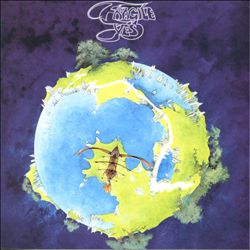
Fragile

Yes didn't invent progressive rock, but they may very well have defined it. Once their classic lineup of Jon Anderson, Chris Squire, Steve Howe, Rick Wakeman, and Bill Bruford locked into place for 1971's Fragile, the band crystallized all of the sonic and visual tropes that eventually became prog-rock clichés. Yes shifted between complicated time signatures, spliced pastoral folk and Baroque classical into their muscular rock & roll, structured their songs as mini-suites, and wrapped the entire package in fantastical artwork by Roger Dean. This incarnation of Yes didn't last long -- another prog innovation they pioneered was the ever-evolving lineup -- but it set the pace not only for the rest of the '70s, but for the prog-rock genre at large. Yes may have embodied prog but they didn't stay still. Once the band regrouped in the late '70s, they embraced the steely, shiny sounds of album-oriented rock and, later, new wave, enlisting Trevor Horn (best-known as the mastermind behind the Buggles) to produce their 1983 album 90125. Horn shaped the dazzling "Owner of a Lonely Heart," which gave Yes their first American number one hit single in 1984, turning the group into an MTV staple in the process. Yes didn't stay in MTV's good graces for long. By the end of the '80s, the band had fallen out of fashion and into a legal battle over the rights to group's name. These matters were settled in the early '90s, opening up decades where various past members would reunite for tours and records, maintaining a faithful fan base until well into the 21st century.

The members of Yes had deep roots in the British beat scene of the '60s. Jon Anderson played in the Warriors, who cut a 45 for Decca in 1964, before playing with Gun in 1967, and he had a pair of solo singles to his name on Parlophone. Anderson met bassist Chris Squire, formerly of the prog outfit Syn, and they hit it off, forming a band shortly afterward. The duo harbored an affection for pop harmony along with a predilection for progressive rock, and that was the operating principle behind the nascent Yes. In short order, Anderson and Squire recruited a roster of like-minded musicians: keyboardist Tony Kaye, drummer Bill Bruford, and Squire's Syn-mate, guitarist Peter Banks.

Yes landed their first gig in October of 1968, when they played London's Speakeasy Club. The next month, they scored the opening spot for Cream's farewell concert at the Royal Albert Hall, a plum spot that led to a residency at the Marquee Club and an appearance on John Peel's Top Gear radio show. The band released their first single, "Sweetness," in 1969, followed by an eponymous full-length debut in November of that year. These early recordings found Yes operating in a psychedelic-tinged pop vein, but pop success wasn't forthcoming, at least at this stage.
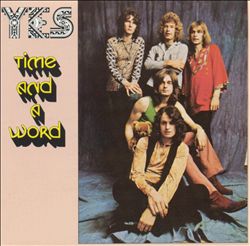
Time and a Word

During the recording of their second album, Banks left the group and was replaced by Steve Howe, formerly of Tomorrow, who recorded the quintessential British psych single "My White Bicycle." Howe may appear on the cover of 1970's Time and a Word, but the record featured Banks. Howe didn't make his recording debut with the band until The Yes Album, a 1971 LP that found the group hitting their stride. Expanding their horizons by playing with folk, space rock, and pop, Yes unveiled several of their signature anthems on The Yes Album, including "Starship Trooper," the album rock staple "All Good People," and "Your Move," which cracked the Billboard Top 40.
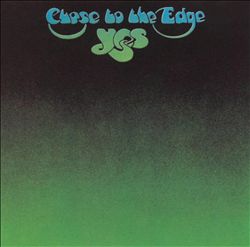
Close to the Edge

With The Yes Album performing well on both sides of the Atlantic, Yes toured heavily, and began work on a fourth album. Kaye quit the band in August 1971 to join Peter Banks in Flash, so Yes hired Rick Wakeman, a keyboardist who'd previously played with the Strawbs. Wakeman's majestic, nearly Baroque stylings -- created with a bank of nearly a dozen instruments -- combined with Howe's intricate guitar, the supple rhythm section of Squire and Bruford, and the keening vocals of Anderson gave Yes a unique sound, while album designer Roger Dean gave the band a distinctive, fantastical look. This combination was unveiled on Fragile, an album that featured showcases for each of the musicians along with two of their signatures: the epic "Long Distance Runaround" and "Roundabout," which went all the way to number 13 on Billboard. This same lineup quickly released a cover of Simon & Garfunkel's "America" as a single -- it peaked at 46 -- but their primary interest was thematically linked albums, such as the 1972 record Close to the Edge, which contained two lengthy suites. The album was a smash in both the U.S. and the U.K., reaching number three and number four, respectively.
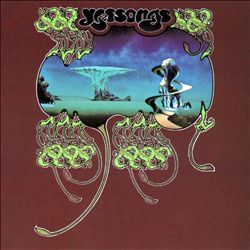
Yessongs

Bruford left Yes after Close to the Edge, replaced by Alan White, who'd previously drummed with John Lennon & the Plastic Ono Band. White made his recording debut on 1973's Yessongs, a double-live album that also featured recordings with Bruford; it peaked at seven in the U.K. and 12 in the U.S. Shortly after Yessongs, Yes released their magnum opus, Tales from Topographic Oceans, in late 1973. A double-LP containing a mere four songs, Tales from Topographic Oceans sold well at the time but it proved divisive, often held up as the peak of prog-rock excesses. One of its detractors was Wakeman, who decided to leave the group after the album's supporting tour. The band's new keyboardist, Patrick Moraz, appeared on Relayer, which charted well upon its November 1974 release, but the band quickly took a break to pursue other projects.
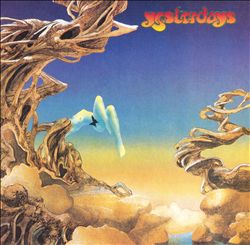
Yesterdays

The mid-'70s were awash with Yes product. In addition to solo albums from Squire, Howe, White, Anderson, and Moraz, Atlantic released a compilation called Yesterdays in March 1975, and the concert film of Yessongs had a theatrical release. Yes regrouped at the end of 1976, swapping out Moraz for a returning Wakeman. This revived lineup released Going for the One, a sleek and succinct album, in August 1977; the album featured the hit singles "Wonderous Stories" and "Going for the One." A year later, the group released Tormato -- it reached the Top Ten in both the U.K. and the U.S. -- then went into hiatus as the individual members pursued solo projects. Of these, Jon Anderson's pairing with keyboardist Vangelis was the most successful, resulting in the British Top Ten single "I Hear You."
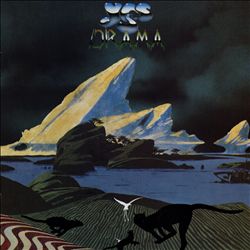
Drama

Yes attempted to start a new album in March 1980, but Wakeman and Anderson quickly left the sessions. As their replacements, Howe, Squire, and White hired Trevor Horn and Geoffrey Downes -- the heart of the new wave group the Buggles, whose "Video Killed the Radio Star" was the first video played on MTV. The resulting Drama performed respectably, reaching number two in the U.K. and 18 in the U.S. Atlantic rushed out Yesshows, a double-live album culled from recordings from the mid-'70s, in January 1981, but a few months later Yes announced their breakup. Howe and Downes formed Asia with John Wetton and Carl Palmer, scoring a major hit in 1982 with their eponymous debut.

Squire and White formed a new band called Cinema in 1982, inviting original Yes keyboardist Tony Kaye and guitarist Trevor Rabin to join. Cinema didn't get off the ground until Squire asked Anderson to join, but once the vocalist was in place, the band became Yes. Horn rejoined to produce this new version of Yes, which wound up with the biggest hit the group ever had with the brash, modernist "Owner of a Lonely Heart." A hit on pop radio and MTV, "Owner of a Lonely Heart" topped the Billboard charts, and its accompanying album, 90125, had two other big mainstream rock hits in "Leave It" and "It Can Happen."
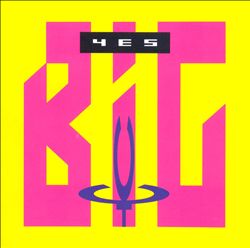
Big Generator

Despite the massive success of 90125, Yes had difficulty delivering a sequel in a timely fashion. Big Generator contained production by Horn, but he left during the sessions. The album performed respectably, reaching 15 in the U.S. and 17 in the U.K., but it generated no hit singles. Around the release of Big Generator, the Yes camp became embroiled in legal battles over the group's name. During this time, Anderson, Bruford, Wakeman, and Howe reunited, releasing an album under this name in 1989. The quartet continued to tour with "An Evening of Yes Music" through 1990, and not long afterward, the lawsuit was settled in their favor, paving the way for a monumental Yes reunion in 1991. Comprising Anderson, Bruford, Wakeman, Howe, Squire, Kaye, White, and Rabin, this new version of Yes released a new album, Union, and the retrospective box set Yesyears in 1991, accompanied by a supporting tour.
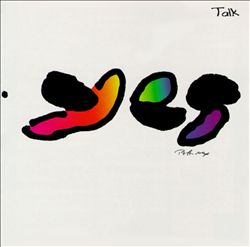
Talk

Through the '90s and 2000s, the Yes lineup was fluid, with members playing in different contexts either on their own or under the group umbrella. The 1994 album Talk featured Anderson, White, Kaye, Squire, and Trevor Rabin. A year later, Anderson, Howe, Squire, Wakeman, and White -- the lineup that constituted Yes in the mid-'70s -- reunited for a tour, which resulted in a pair of new albums called Keys to Ascension, which augmented live material with studio recordings. Wakeman left during the recording of new material, leaving Billy Sherwood -- a guitarist who joined the band early in the '90s -- as the keyboardist. Sherwood was featured heavily on 1997's Open Your Eyes, an album which originally began life under the Conspiracy moniker, his band featuring Squire. Keyboardist Igor Khoroshev joined for 1999's The Ladder.
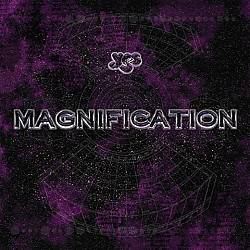
Magnification

Sherwood left in 2000, followed by Khoroshev, by which time Howe was touring regularly with Yes. Magnification, a 2001 album, found the group recording with an orchestra. Wakeman came back aboard in 2002 for a tour and stayed through their 35th anniversary tour in the mid-2000s. A second box set, In a Word, arrived in 2002, with the live box The Word Is Live arriving in 2005.
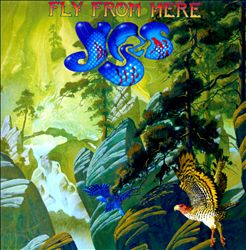
Fly from Here

Howe, Squire, Downes, and White recorded the Trevor Horn-produced Fly from Here, which appeared in 2011; it featured Benoit David, a singer who came to prominence in a Yes tribute band, as lead vocalist. David was quickly replaced by Jon Davison, who stayed with the band through the mid-2010s, appearing on 2014's Heaven & Earth, which was produced by Roy Thomas Baker.
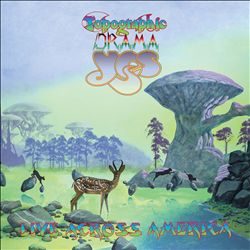
Topographic Drama - Live Across America

Squire died of leukemia in June of 2015, but the band carried on, as per his request. They toured in 2016, playing half of Tales from Topographic Oceans and all of Drama; the accompanying 2017 live album was appropriately called Topographic Drama: Live Across America. A 50th anniversary tour was undertaken in 2018 and was commemorated with the 2019 release 50 Live.

— Stephen Thomas Erlewine

✍️ Record Review

On Yes' first two albums, Yes (1969) and Time and a Word (1970), the quintet was mostly searching for a sound on which they could build, losing one of their original members -- guitarist Peter Banks -- in the process. Their third time out proved the charm -- The Yes Album constituted a de facto second debut, introducing the sound that would carry them forward across the next decade or more. Gone are any covers of outside material, the group now working off of its own music from the ground up. A lot of the new material was actually simpler -- in linear structure, at least -- than some of what had appeared on their previous albums, but the internal dynamics of their playing had also altered radically, and much of the empty space that had been present in their earlier recordings was also filled up here -- suddenly, between new member Steve Howe's odd mix of country- and folk-based progressive guitar and the suddenly liberated bass work and drumming of Chris Squire and Bill Bruford, respectively, the group's music became extremely busy. And lead singer Jon Anderson, supported by Squire and Howe, filled whatever was left almost to overflowing. Anderson's soaring falsetto and the accompanying harmonies, attached to haunting melodies drawn from folk tunes as often as rock, applied to words seemingly derived from science fiction, and all delivered with the bravura of an operatic performance -- by the band as well as the singer -- proved a compelling mix. What's more, despite the busy-ness of their new sound, the group wasn't afraid to prove that less could sometimes be more: three of the high points were the acoustic-driven "Your Move" and "The Clap" (a superb showcase for Howe on solo acoustic guitar), and the relatively low-key "A Venture" (oddly enough, the latter was the one cut here that didn't last in the group's repertory; most of the rest, despite the competition from their subsequent work, remained in their concert set for years to come). The Yes Album did what it had to do, outselling the group's first two long-players and making the group an established presence in America where, for the first time, they began getting regular exposure on FM radio. Sad to say, the only aspect of The Yes Album that didn't last much longer was Tony Kaye on keyboards: his Hammond organ holds its own in the group's newly energized sound, and is augmented by piano and other instruments when needed, but he resisted the idea of adding the Moog synthesizer, that hot instrument of the moment, to his repertory. The band was looking for a bolder sound than the Hammond could generate, and after some initial rehearsals of material that ended up on their next album, he was dropped from the lineup, to be replaced by Rick Wakeman.

— Bruce Eder


I. Exposition: Time and a WordOdds are you already have an opinion on Yes, and since you're reading this website, there's a good chance that your view of them isn't a favorable one. Despite the fact that a formidable portion of the music we love (anyone from Radiohead and Super Furry Animals to Hella) is directly influenced by Yes and their prog-rock peers, we tend to look at the early 70's through punk's distorting lens, and that lens shows us images of dinosaur muso wankers lumbering from stadium to stadium with comically oversized light shows and Victorian clothing (never mind that punk itself became a mill of convention and spectacle in only a few short years).Of course, there's quite a nugget of truth to that image; on-again-off-again Yes keyboardist Rick Wakeman staging his Myths and Legends of King Arthur and the Knights of the Round Table album as an ice show alone demonstrates how out of hand things could get when the budget was too big and judgment was lacking.

When you move beyond the pageantry and pomp, though, you're left with some pretty interesting music. Yes were the most popular and longest lasting of the quartet of bands that defined progressive rock in the early 70's. Genesis, ELP, and King Crimson were the others, and listening back to them, it's easy to see why Yes won out. For all their lengthy songs, virtuoso musicianship and softheaded philosophical musings, Yes were fundamentally approachable, even radio-friendly. Try listening to "Roundabout" or "I've Seen All Good People" without getting them stuck in your head. Of course, there's a certain ridiculousness to the grandiose Roger Dean artwork, would-be poetic lyrics (random sample: "Battleships, confide in me and tell me where you are!"), and multi-part suite naming formulas-- but then, that's part of why Yes got listened to in the first place.Nevertheless, a past penchant for prog is a major skeleton in the closet for a lot of people, but as Rhino reissues the first eleven Yes studio albums, it feels as good a time as any to let the bones rattle in public.

Feel free to forgo the band's first two albums with guitarist Peter Banks (we did), records that feature a band still finding its feet and occasionally hitting on something great, like "Astral Traveler", but often stumbling.

II. The Albums: The Solid Time of Change Yes had already released two albums, but 1971's The Yes Album was the record that put them on American FM radio and into millions of living rooms around the world. With guitarist Steve Howe on board for the first time, it also established the classic Yes sound, where essentially any instrument could take the lead at any time. Drummer Bill Bruford and bassist Chris Squire (the only member to appear on every Yes album) were a tight and angular, almost funky rhythm section by this point, while Howe's slashing guitar parts fit nicely into that mix. The two-part "I've Seen All Good People" is one of the band's best singles, while Howe's slow, spacey guitar build at the end of "Starship Trooper" is one of the great Yes moments. Howe also shows off his acoustic chops on "The Clap", a rollicking rag that bears little resemblance to anything else in the band's catalog (the original album version was a live recording, the reissue also appends a slightly crisper studio version).

This album showcases Yes at their most concise, and is probably the best starting point. 1972's Fragile introduced Yes' highest-powered line-up, as the silver-cape wearing, 12-keyboard-hauling Rick Wakeman replaced the mediocre Tony Kaye. But the question is, what was "fragile?" Their egos? The battle between the perfectly balanced arrangements-- as on classic rock radio staples "Roundabout" and "Long Distance Runaround"-- and each virtuoso's need to grandstand, vented through five solo interludes (most memorably Steve Howe's "Mood for a Day")? All that firepower could have ruined the band, yet on Fragile, they put songcraft firmly over indulgence. The intriguing middle section of "South Side of the Sky" might've blown up like a laser light show had they recorded it in the late 70's, and even though the band had a knack for crescendos and flighty, eagle-centric lyrics, they were more likely to get high through chugging guitars and Bruford's precise drumwork than outright bombast. "Heart of the Sunrise" still holds up as a deftly constructed proto math-rock epic, and Jon Anderson would never sing a lyric as plainly as "I feel lost in the city" again.

The band's crowning achievement, Close to the Edge, contains only three lengthy "songs," but each one is an absolute epic. The title track dominates all of side one of the original LP, rushing in with a burbling, dissonant intro, Howe's jagged riffing and Wakeman's fluttering fingers building a dense, overpowering texture. Squire's bass in the majestic "Total Mass Retain" section could liquefy solid tissue at the right volume; it's almost impossible to believe it hasn't been made into a hip-hop sample yet. Most importantly, the title track has a sense of coherent progression, tension and release that most of the band's other side-filling epics lack. "And You and I" is arguably the ten most gorgeous minutes Yes ever laid to tape. It begins humbly, with twelve-string acoustic guitar, rises through mellotron-soaked crescendos, and then does it all again, building to a huge closing climax called "Apocalypse", essentially laying out the blueprint for Sigur Rós. That leaves "Siberian Khatru" to close out the album with nine minutes of hook-stuffed organ and guitar interplay, understated harmony vocals and more of Squire's chunky, front-and-center bass playing. This record is an essential document of just how powerful prog could be when focused.

It couldn't last. On 1974's Tales from Topographic Oceans, they simply took things too far. Anderson's lyrics (supposedly based on Japanese "shastrick" scriptures, wtf?) are pure astral hogwash, and even worse, they're printed so you can read them. The band seems totally disinterested in communicating musically, and each of the four twenty-minute compositions (that's right, a double LP with four songs on it) squanders its few inspired moments. "The Ancient (Giants Under the Sun)" is the most promising, opening with what should be an exhilarating passage of rushing keyboards topped by a blistering solo from Howe, but new drummer Alan White can't keep up the intensity like Bruford (by then defected to King Crimson) had, and it collapses under its own weight. Likewise, a pretty choral verse intervenes toward the end of "The Remembering (High the Memory)", but comes too late to salvage the listless keyboard washes and lame noodling.

It was exactly this type of excess that had fans saying "no" to Yes for the first time in their career. Even Wakeman was so disgusted that he quit after the album's completion. Possibly to recoup their rep, Yes quickly made for the studio in the hopes of turning out another masterwork. However, in spite of the flashy musicianship that made Relayer a fan-favorite, the record is all but unlistenable to the rest of the world. Noisy and grotesque, it betrays some of the most atrocious taste of any Yes record. Temporary member Patrick Moraz shows up with his own bank of keyboards that sound even more tweaked than Wakeman's, and he pushes the band to garish new soundworlds; "Gates of Delirium" is a kind of nightmare children's book story about men (or elves? hobbits??) going to war. The band recreates the battle in a jaw-droppingly over-the-top instrumental that fades into a longing, eerie finale. That's followed by "Soundchaser", a vomit stew of jarring rhythms and bastardized funk climaxing with Anderson's infamous "cha cha cha" section. And "To Be Over" would've been pretty if they hadn't jammed it with instrumentals. Someone once told me that this is what they should have blasted at Noriega to drive him out of that nunnery; casual listeners turned their backs on this mess, while fans that could appreciate its dissonant, virtuosic extremes hid under their headphones and just kept basking.

After an extended hiatus following Relayer, Yes regrouped for 1977's Going for the One, bringing grand old ham Wakeman back to record an album of much fewer pretensions than anything they'd done since Fragile. Of course, that really meant only one 15-minute epic instead of four, but right down to the non-Roger Dean cover art, it signaled a new start for Yes. The title track, with Howe's great steel-guitar opening riff, did indeed reveal a band that still knew how to rock even if lyrics like, "Get the idea cross around the track, underneath the flank of a thoroughbred racing chaser," exposed their hippie-mystic trappings. However, Squire's "Parallels" and the Beatlesque "Wonderous Stories" forecast the band's 80s rebirth as pop stars. Furthermore, the album's lone concession to headier days and side-length symphonettes, "Awaken", was a fairly amazing example of how Yes could fuse new age sentiments and reverb-drenched tinker-bell soliloquies, yet somehow come out unscathed. Sure, it went on a bit too long, but in retrospect, it was a fine last gasp for a band concerned with "progress" in the 70's.

Perhaps inspired by the fact they didn't all hate each other after finishing Going for the One, Yes took the same lineup in for 1978's Tormato. However, even as streamlined song-lengths and a couple of attempts at pop crossover appeared, the band sounded desperate rather than invigorated. Primary offenders on an album among the most hated of all hated Yes records include the flat, rigid "Don't Kill the Whale", in which Wakeman managed to insert ridiculously baroque synth stylings into a would-be Greenpeace disco protest anthem, while Anderson pleads with us to "dig it." And whomever thought it was a good idea to invite Anderson's kid to twee it up on "Circus of Heaven" should probably have been fired on the spot. Oh right: it was Anderson, and he left right after this record. It's too bad, because relatively aggressive, driving numbers like "Future Times" and the fusion-tinged "On the Silent Wings of Freedom" weren't bad, even if the album's lack of punch throughout sucked the life out of most of the music.

With Anderson's and Wakemen's defections, Yes recognized that they could no longer continue in the same lackluster manner as on Tormato. At the end of the 1970s, the band finally felt ready to embrace a new era. A Buggles era! Trevor Horn and Geoff Downes, possessing neat new synthesizers and actual MTV experience, joined for 1980's Drama, and paved the way for a decade of Yes at their most pop-friendly. The transition, however, was not an easy one. For starters, longtime fans weren't fooled for a minute by Horn's vocals, which didn't quite hit those high notes as easily as Anderson. Also, songs like "White Car" and "Into the Lens" just didn't sound like Yes, rather like Yes-influenced, overblown AOR fare. However, "Machine Messiah", "Does It Really Happen?" and especially the new-wave-meets-prog of "Tempus Fugit" were better than anything the band had done in years and, doubtlessly due to the Buggle-presence, sparkled with state-of-the-art production sheen. Of course, this lineup would disband shortly after the record, but lessons were learned and the next time Yes graced the world with an album, the world listened.

On Drama, Horn had simply attempted to emulate Jon Anderson, but by the time he produced 1983's 90125 for the (yet again) newly reformed and reconfigured Yes, he had become the synth-pop genius behind ABC, Frankie Goes to Hollywood and the Zang Tuum Tumb label, and gets no small share of credit for reinventing Yes as a hit 80's pop band. The extensive drum and horn samples on "Owner of a Lonely Heart" and the glowing a capella on "Leave It" turned those songs into radio hits; but just when you think they've sold out, they write elaborate pop songs like "It Can Happen" or characteristically bizarre lyrics like, "This world I like/ We architects of life," or, "Your heart is inside your head." This line-up formed practically from scratch, bringing Squire and White back together with Anderson and the long-lost Tony Kaye; Trevor Rabin-- the only one who didn't bleach his hair-- completed the band with an 80's hard rock guitar sound that's the most dated thing about the record. Still, if you can handle the style-disconnect, 90125's songcraft makes it one of their tightest records.

III. Recapitulation: High the Memory Yes may have disappeared commercially after 90125, but they're still active today in varying lineups, and have a full nine subsequent studio albums that Rhino has wisely chosen not to reissue. The much-delayed follow-up to 90125, Big Generator, was a dud of spectacular proportions (in all seriousness: 0.0), and few of their subsequent releases are much better. For all intents and purposes, the band that tours now is something of a traveling history lesson, so it'll be interesting to see how hindsight treats them in another twenty or so years, when they've finally hung it up and rested on their laurels. For now, don't surround yourself with yourself and move on back a square. Yes would love to meet you.

— Chris Dahlen, Dominique Leone & Joe Tangari, Pitchfork