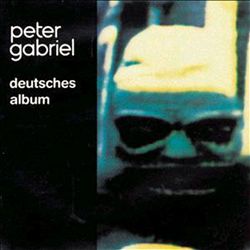
🎵
Artist: Peter Gabriel

Ovo

🏷️ Rock 📅 2000 💿 CD ⭐ ***

Field
Rock
Recorded
2000
Label
RealWorld
Pressing
Aus
Rating
***
Discs
1
Media
CD
Bought
14-Aug-2000
Cost
¤27.00

🎶 Track Listing

13 tracks · 1:14:15
  1. 1 The Story Of OVO 5:21
  2. 2 Low Light 6:37
  3. 3 The Time Of The Turning 5:06
  4. 4 The Man Who Loved The Earth - The Hand That Sold The Shadows 4:15
  5. 5 The Time Of The Turning (Reprise) - The Weavers Reel 5:37
  6. 6 Father, Son 4:56
  7. 7 The Tower That Ate People 4:50
  8. 8 Revenge 1:30
  9. 9 White Ashes 2:34
  10. 10 Downside-Up 6:05
  11. 11 The Nest That Sailed The Sky 5:06
  12. 12 Make Tomorrow 12:35
  13. 13 Data Track 9:43

📜 Artist Biography

Security

As the leader of Genesis in the early '70s, Peter Gabriel helped move progressive rock to new levels of theatricality. He was no less ambitious as a solo artist, but he was more subtle in his methods. With his first eponymous solo album in 1977, he began exploring darker, more cerebral territory, incorporating avant-garde, electronic, and worldbeat influences into his music. The record, as well as its two similarly titled successors, established Gabriel as a critically acclaimed cult artist, and with 1982's Security, he began to move into the mainstream; "Shock the Monkey" became his first Top 40 hit, paving the way for his multi-platinum breakthrough So in 1986. Accompanied by a series of groundbreaking videos and the number one single "Sledgehammer," So became a multi-platinum hit, and Gabriel became an international star. Instead of capitalizing on his sudden success, he began to explore other interests, including recording soundtracks and running his company Real World. By the time he returned to pop with 1992's Us, his mass audience had faded away and he spent the remainder of the '90s working on multimedia projects for Real World.

Following his departure from Genesis in 1976, Peter Gabriel began work on the first of three consecutive eponymously titled albums; each record was named Peter Gabriel, he said, as if they were editions of the same magazine. In 1977, his first solo album appeared and became a moderate success due to the single "Solsbury Hill." Another self-titled record followed in 1978, yet received comparatively weaker reviews. Gabriel's third eponymous album proved to be his artistic breakthrough, however. Produced by Steve Lillywhite and released in 1980, the album established Gabriel as one of rock's most ambitious, innovative musicians, as well as one of its most political -- "Biko," a song about a murdered anti-apartheid activist, became one of the biggest protest anthems of the '80s. "Games Without Frontiers," with its eerie chorus, nearly reached the Top 40.
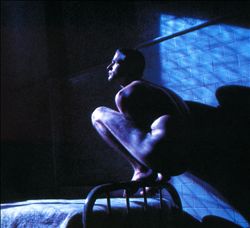
Birdy

In 1982, Gabriel released Security, which was an even bigger success, earning positive reviews and going gold on the strength of the startling video for "Shock the Monkey." Just as his solo career was taking off, Gabriel participated in a one-shot Genesis reunion in order to finance his WOMAD -- World of Music, Arts and Dance -- Festival. WOMAD was designed to bring various world musics and customs to a Western audience, and it soon turned into an annual event, and a live double album was released that year to commemorate the event. As Gabriel worked on his fifth album, he contributed the soundtrack to Alan Parker's 1984 film Birdy. His score was highly praised and it won the Grand Jury Prize at Cannes that year. After founding Real World, Inc. -- a corporation devoted to developing bridges between technology and multi-ethnic arts -- in 1985, he completed his fifth album, So.
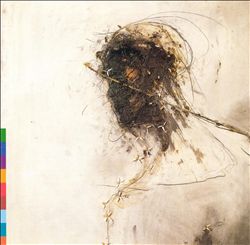
Passion

Released in 1986, So became Gabriel's commercial breakthrough, largely because his Stax homage "Sledgehammer" was blessed with an innovative video that combined stop-action animation with live action. So climbed to number two as "Sledgehammer" hit number one, with "Big Time" -- featuring a video very similar to "Sledgehammer" -- reaching the Top Ten and "In Your Eyes" hitting the Top 30. As So was riding high on the American and British charts, Gabriel co-headlined the first benefit tour for Amnesty International in 1986 with Sting and U2. Another Amnesty International Tour followed in 1988, and the following year, Gabriel released Passion: Music for The Last Temptation of Christ, a collection of instrumentals used in Martin Scorsese's film. Passion was the furthest Gabriel delved into worldbeat, and the album was widely acclaimed, winning the Grammy Award in 1989 for Best New Age Performance. In 1990, he released the hits compilation Shaking the Tree.
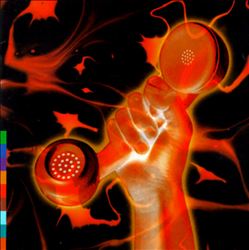
Secret World Live

Gabriel labored long on the pop music follow-up to So, finally releasing Us in the spring of 1992. During the recording of Us, Gabriel went through a number of personal upheavals, including a painful divorce, and those tensions manifested themselves on Us, a much darker record than So. For various reasons, not the least of which was the fact that it was released six years after its predecessor, Us wasn't as commercially successful as So, despite positive reviews. Only one single, the "Sledgehammer" knockoff "Steam," reached the Top 40, and the album stalled at platinum sales. In 1993, Gabriel embarked on the most ambitious WOMAD tour to date, touring the United States with a roster including Crowded House, James, and Sinéad O'Connor, with whom he had an on-off romantic relationship. The following year, he released the double-disc Secret World Live, which went gold. Later in 1994, he released the CD-ROM Xplora, one of many projects he developed with Real World. For the rest of the decade, Gabriel concentrated on developing more multimedia projects for the company and working on a new studio album.
Up

Up was released in 2002, a full decade after Gabriel's last studio effort. Dense, cerebral, and often difficult, the record peaked at number nine but failed to sell well in America. It fared slightly better in Canada, where it went gold. He then turned his attention to a host of different projects, although the release of Big Blue Ball -- a compilation of collaborative performances recorded at Real World Studios during the '90s -- helped placate fans while Gabriel focused his energies elsewhere. He eventually returned to the studio for another album, 2010's Scratch My Back, which featured orchestral covers of songs originally performed by Radiohead, Arcade Fire, Paul Simon, David Bowie, and others. Gabriel uncharacteristically delivered the sequel to Scratch My Back quickly, releasing New Blood -- a collection of orchestral reinterpretations of his own songs -- in the fall of 2011. The following year, Gabriel held a lavish celebration of the 25th anniversary of So, releasing several deluxe editions of the record -- the largest being a four-CD, two-DVD, two-vinyl box -- and launching the Back to Front tour, where he played So in its entirety. In 2014, Gabriel was inducted into the Rock & Roll Hall of Fame as a solo act, joining Genesis, which had been inducted four years earlier.

— Stephen Thomas Erlewine

✍️ Record Review

In 1997, Peter Gabriel was asked to pilot a visual project for London's Millennium Dome. OVO is a work based on the intersecting problems of race relations, environmental concerns, family issues, and fairy tales as allegories, violence, and more. And keep in mind that this was to be a visual piece. Gabriel, to meet the challenge for CD, added a ton of multimedia to the musical soundtrack: there is a drawn storybook, The Story of OVO, a view of the installation itself from every angle, and many stopgap notes, drawings, and the like. For the soundtrack, he enlisted the help of collaborators such as Elizabeth Fraser, Neneh Cherry (whatever happened to her third record, the one she did with Tricky?), Richie Havens, the Black Dyke Mills Band, the Electra Strings, Paul Buchanan (of Blue Nile), Adzido, the Dhol Foundation drummers, and Iarla Ó Lionáird from the Afro-Celt Sound System. Needless to say, the music is all over the map, from a rap version of the "Story of Ovo" to an Irish jig to Gabriel's percussive culture plundering soundscapes and new songs (including a truly dull rework of "Digging in the Dirt") to Eno-like ambiences to folk songs and new songs with Havens and Ó Lionáird singing like the opposite ends of a heavenly choir and Liz Fraser soaring over the Dhol Foundation drummers. It sounds awesome doesn't it? It should be. But it's not. OVO sounds labored, choppy, and pasted together, like it is the soundtrack to a visual installation, and feels incomplete without it. This is not a project like Passion was or even Birdy; it's a pastiche that attempts to be as ambitious as the installation project. And it is ambitious. Unfortunately, musically it isn't consistent enough to sustain the listener's interest for the entire length of the recording. It is a curious project with moments, but is most likely for hardcore fans only.

— Thom Jurek


Geffen A&R; executive Tony Berg was quoted a few years back as suggesting that Peter Gabriel should call his next album Peter Gabriel Makes Grown Men Cry. To this day, I'm not exactly sure how he meant that. Either: #1: Gabriel's songs have apparently continued to be so heart-wrenchingly emotional that men still shed tears simply at the sound of his voice. #2: He's such an anal perfectionist that it's taken him years to craft his latest studio album, and fans, as well as record execs, weep with frustration. As for the frustration thing, it's been eight years, and Gabriel still hasn't finished it.

2000, however, did see the release of a new UK-only Peter Gabriel record titled OVO: The Millennium Show. The album is technically a soundtrack to the disastrous Millennium Dome show that occurred in England a year ago. Just as Geffen attempted to convince the public that Beck's Mutations was not an "official" follow-up to Odelay, OVO is being deemed "not the official follow-up to 1992's Us". So, what's a fan to do, except simply take this as consolation for four-fifths of a decade of waiting? For one, they can hope that the real album is better. OVO has its moments, sure, but it's also fairly inconsistent. The sentiment and plot—yes, there's a plot—is, in fact, so hackneyed it's hard to believe that Berg Implication #1 could be the case. Despite all this, Gabriel does at times come through: a little over half of the record ranks alongside his early 90s work. Had the rest been cut, OVO's runtime would weigh in at 20 minutes less, but because they're all here, their mediocrity preserved in plastic for all time, the album's pitfalls prevent it from gaining consistency and cohesiveness.

According to the liner notes, Gabriel has recruited some of his "favourite voices" to sing the bulk of OVO's material. The female presence is welcome; like Kate Bush and Sinéad O'Connor before them, Iarla O Lionaird and the Cocteau Twins' Elizabeth Fraser provide a lovely, sensual atmosphere to their cuts. When Richie Havens and Paul Buchanan pop up, though, it's unclear why Gabriel, whose vocals would have lent themselves infinitely better to these songs, didn't just sing them himself.

"The Story of OVO" opens the album with promising, ethnically rich accompaniment, until Rasco (??) and Neneh Cherry start rapping. In the more than thirty years Peter Gabriel has been recording, he's never before written a rap, and it becomes clear immediately: "A long time ago in a far away land/ There was a man/ Who learned to understand." The Gabriel-sung chorus and the rhythmic closing almost make the trite lyrics worth enduring. Okay, they don't. But that's somewhat easily forgiven with a casual press of the 'skip' button. The first half's only major standout, "Low Light", follows with a beautiful ambient feel and an intro previewing the orchestral melody of a later track, the musically stunning "Downside-Up". "The Time of the Turning" sounds nice initially, but ultimately reveals itself as mediocre, with Havens and Fraser taking lead vocals on a generally forgettable melody. "The Weavers' Reel" pairs a reprise of "Turning" with a formulaic, lifeless Celtic reel, augmented with an unforgivably cheesy dance beat. And "Father, Son" attempts to go the way of Gabriel's previous ballads, but with such a saccharine sentiment and ordinary melody, it goes the way of elevator music. It's after this track that the line of demarcation from indifference to actual greatness becomes apparent, since the next song sets a new standard of quality which is ultimately fulfilled by OVO's remainder. "The Tower That Ate People" is Gabriel's funkiest track since "Sledgehammer", with growling verse vocals, phased guitars, overdriven organ, and a gorgeously haunting bridge melody. "Revenge" follows flawlessly with a breathtakingly strong, layered rhythm by African drum group The Dhol Foundation. And the 10-minute closing collaboration with electronic artist BT, "Make Tomorrow", is consistently enjoyable throughout its extravagant running time, bearing enough melodic and tonal changes to keep the listener interested. But the best track by far arrives just before the ending. "Downside-Up" is, melodically, one of the best songs in Gabriel's entire catalog—and it was a damn strong catalog to begin with. The banal lyrics keep it from joining the ranks of his other classics, but the fluidity and richness of the chorus melody, and the skilled, outstanding guitar line that enters at the bridge, makes it a strong contender.

OVO should nicely tide over you longtime fans until the eventual release of the forthcoming Up. It's inconsistent, though, and at times overbearingly trite, but it does contain some surprisingly effective material. If nothing else, the $30 import tag is a better bargain for the obsessive fan than a plane ticket to Britain.

— Spencer Owen, Pitchfork