🎡
Artist: Bruce Cockburn

You've Never Seen Everything

🏷️ Rock πŸ“… 2003 πŸ’Ώ CD ⭐ ***

Field
Rock
Recorded
2003
Label
Shock
Pressing
Aus
Rating
***
Discs
1
Media
CD
Bought
10-Oct-2003
Cost
¤27.00

πŸ“œ Artist Biography

Immensely popular in his native Canada, singer/songwriter Bruce Cockburn has found only cult success south of the border, in spite of a rich, varied body of work and considerable critical nods. He has won numerous Juno Awards and has kept the quality control on most of his albums at a high level.
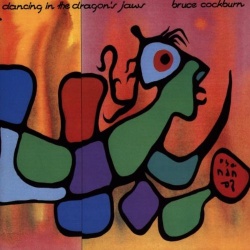
Dancing In The Dragon's Jaw

Cockburn's first decade of work (1970-1979) is largely literate, singer/songwriter folk-rock, often with a strong Christian tone and mystical, devotional lyrics. In 1979, Cockburn had his only major U.S. single, "Wondering Where the Lions Are," which peaked at number 21. The accompanying album, Dancing in the Dragon's Jaw, saw him augmenting his music with worldbeat rhythms, an approach he would continue over his next few albums. Cockburn toned down his Christian viewpoint for much of the '80s, partially as a way of disconnecting himself from the American religious right, which he found antithetical to his own spiritual beliefs, and partially to concentrate on more humanitarian, political subject matter. In 1984, Cockburn produced an AOR hit, "If I Had a Rocket Launcher," whose accompanying video depicted conditions in war-torn Central America and gained a fair amount of MTV play.
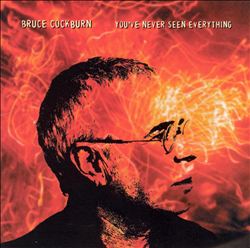
You've Never Seen Everything

Cockburn's later '80s work took on a more streamlined rock sound, and his political agenda was weighted toward environmental concerns, as well as oppression. In the '90s, he returned to the more introspective feel recalling his earlier work, and moved toward a more global and political perspective with issues of the angry and polemical for You've Never Seen Everything in 2003. 2005's Speechless was an all-instrumental affair, showing off the artist's skill on guitar, while the next year's Life Short Call Now showed an artist at the prime of his musical maturity. A live set, Slice o Life: Bruce Cockburn Live Solo, arrived in 2009. After a brief tour, Cockburn returned to the studio in 2010, where he finished work on a new collection entitled Small Source of Comfort, which was released in early 2011; it is an intimate set of songs and guitar-based instrumentals (including the live but never recorded Cockburn standard "The Gift"). The album was produced by Colin Linden and features violinist Jenny Scheinman. After the birth of his daughter Iona that year, Cockburn faded into the backdrop to focus on family and writing his autobiography. He also assembled the 11-disc career-spanning box set, Rumours of Glory, which was issued in 2014. His memoir of the same title was published in 2016. Inspired by a book of poems by 20th century Canadian poet Al Purdy, Cockburn set to work writing new material and entered a California studio with Linden as producer/guitarist, his road band, and guests including cornetist Ron Miles and Mary Gauthier. The finished album, Bone on Bone (his 33rd) was issued by True North on September 15, 2017, a week before Cockburn was inducted -- along with Neil Young, Beau Dommage, and StΓ©phane Venne, into the Canadian Songwriters Hall of Fame.

—Steve Huey

✍️ Record Review

It feels weird to be writing that Bruce Cockburn has just issued his 27th album, but that's what You've Never Seen Everything is. It's been a quite a ride since 1970; the changes lyrically and musically have been enormous, and the world view of the artist β€” politically, spiritually, and psychologically β€” has evolved consciously and extensively. Of his many gifts, two of his most developed are his journalistic eye for detail, and having one ear always to the ground. This time out, the view is sharply contrasting from one song to the next. Politically, this is Cockburn's angriest record since World of Wonders or Stealing Fire. A listen to the hypnotic vibe of "All Our Dark Tomorrows," with its spooky, Malian/Ali Farka Toure guitar vibe, points directly at the root of all human evil: greed. "Trickle Down," an over-the-top jazz tune with Brazilian percussion and fine solos by Cockburn and pianist Andy Milne, reveals that by peeling away layer after layer, there are people who actually get paid to keep greed accumulating. But for Cockburn, righteous anger and indignant rage are never the whole picture. "Put It in Your Heart" is about the fierceness of love in the face of fear, both individual and collective, while "Don't Forget About Delight," with its floating violin (Hugh Marsh) and harmonica (Gregoire Maret) lines entwining across the plaintive mix, is an exhortation to keep seeing the beauty with the inner eye despite the outward conditions and single-mindedness in this pursuit.

Sarah Harmer, Sam Phillips, Emmylou Harris, and Jackson Browne also help out on the vocal chores, and Cockburn borrowed Tom Waits' rhythm section of Larry Taylor and Stephen Hodges for balancing the wild musical ride this album is texturally and compositionally. The title track is among the most forward-thinking and sonically adventurous tracks he's ever recorded. Hand percussion and drum loops are interlaced with minimal piano and harmonica riffs shimmering on the fringes; the long, spoken (maybe even preachy) word travelog, full of horrific images and expressionistic electronica, gives way to a sung refrain that transcends the lyric but leaves the listener unsettled. "Postcards From Cambodia" is another one, full of detailed explications of conditions caused by other conditions that have come before, and on the refrain he concedes: "This is too big for anger, too big for blame/We stumble through history, so humanly lame/So I bow down my head and say a prayer for us all/That we don't fear the spirit when it comes to call." Ultimately, this is the hinge track on the album, because Cockburn, despite the barely concealed fury that is contained within him, sees only a spiritual β€” and no, not necessarily "Christian" β€” solution to all of it, from the injustices to the anger and hatred he feels in his own heart for the perpetrators. Cockburn seems to be saying β€” and this is only this writer's interpretation of a very complex, wondrously intricate, and musically adventurous work β€” not to hate those whose actions cause suffering, but to root out the hatred in our own hearts so as not to become them. Action must come from compassion, not merely from anger, or it becomes nothing more than a mirror image of the cause of suffering itself. It is pointless to place this record in a pecking order with Cockburn's other work; that it adds to that body of work immeasurably is compliment enough. However, to say that it is necessary because it can cause self- and world-examination in any listener who plays it through is as high a compliment as can be offered.

— Thom Jurek