Immensely popular in his native Canada, singer/songwriter Bruce Cockburn has found only cult success south of the border, in spite of a rich, varied body of work and considerable critical nods. He has won numerous Juno Awards and has kept the quality control on most of his albums at a high level.
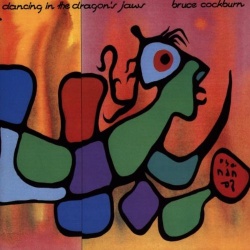
Cockburn's first decade of work (1970-1979) is largely literate, singer/songwriter folk-rock, often with a strong Christian tone and mystical, devotional lyrics. In 1979, Cockburn had his only major U.S. single, "Wondering Where the Lions Are," which peaked at number 21. The accompanying album, Dancing in the Dragon's Jaw, saw him augmenting his music with worldbeat rhythms, an approach he would continue over his next few albums. Cockburn toned down his Christian viewpoint for much of the '80s, partially as a way of disconnecting himself from the American religious right, which he found antithetical to his own spiritual beliefs, and partially to concentrate on more humanitarian, political subject matter. In 1984, Cockburn produced an AOR hit, "If I Had a Rocket Launcher," whose accompanying video depicted conditions in war-torn Central America and gained a fair amount of MTV play.
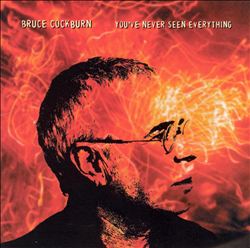
Cockburn's later '80s work took on a more streamlined rock sound, and his political agenda was weighted toward environmental concerns, as well as oppression. In the '90s, he returned to the more introspective feel recalling his earlier work, and moved toward a more global and political perspective with issues of the angry and polemical for You've Never Seen Everything in 2003. 2005's Speechless was an all-instrumental affair, showing off the artist's skill on guitar, while the next year's Life Short Call Now showed an artist at the prime of his musical maturity. A live set, Slice o Life: Bruce Cockburn Live Solo, arrived in 2009. After a brief tour, Cockburn returned to the studio in 2010, where he finished work on a new collection entitled Small Source of Comfort, which was released in early 2011; it is an intimate set of songs and guitar-based instrumentals (including the live but never recorded Cockburn standard "The Gift"). The album was produced by Colin Linden and features violinist Jenny Scheinman. After the birth of his daughter Iona that year, Cockburn faded into the backdrop to focus on family and writing his autobiography. He also assembled the 11-disc career-spanning box set, Rumours of Glory, which was issued in 2014. His memoir of the same title was published in 2016. Inspired by a book of poems by 20th century Canadian poet Al Purdy, Cockburn set to work writing new material and entered a California studio with Linden as producer/guitarist, his road band, and guests including cornetist Ron Miles and Mary Gauthier. The finished album, Bone on Bone (his 33rd) was issued by True North on September 15, 2017, a week before Cockburn was inducted -- along with Neil Young, Beau Dommage, and Stéphane Venne, into the Canadian Songwriters Hall of Fame.
—Steve Huey