Bob Dylan's influence on popular music is incalculable. As a songwriter, he pioneered several different schools of pop songwriting, from confessional singer/songwriter to winding, hallucinatory, stream-of-consciousness narratives. As a vocalist, he broke down the notion that a singer must have a conventionally good voice in order to perform, thereby redefining the vocalist's role in popular music. As a musician, he sparked several genres of pop music, including electrified folk-rock and country-rock. And that just touches on the tip of his achievements. Dylan's force was evident during his height of popularity in the '60s -- the Beatles' shift toward introspective songwriting in the mid-'60s never would have happened without him -- but his influence echoed throughout several subsequent generations, as many of his songs became popular standards and his best albums became undisputed classics of the rock & roll canon. Dylan's influence throughout folk music was equally powerful, and he marks a pivotal turning point in its 20th century evolution, signifying when the genre moved away from traditional songs and toward personal songwriting. Even when his sales declined in the '80s and '90s, Dylan's presence rarely lagged, and his commercial revival in the 2000s proved his staying power.
For a figure of such substantial influence, Dylan came from humble beginnings. Born in Duluth, Minnesota, Bob Dylan (b. Robert Allen Zimmerman, May 24, 1941) was raised in Hibbing, Minnesota, from the age of six. As a child he learned how to play guitar and harmonica, forming a rock & roll band called the Golden Chords when he was in high school. Following his graduation in 1959, he began studying art at the University of Minnesota in Minneapolis. While at college, he began performing folk songs at coffeehouses under the name Bob Dylan, taking his last name from the poet Dylan Thomas. Already inspired by Hank Williams and Woody Guthrie, Dylan began listening to blues while at college, and the genre wove its way into his music. He spent the summer of 1960 in Denver, where he met bluesman Jesse Fuller, the inspiration behind the songwriter's signature harmonica rack and guitar. By the time he returned to Minneapolis in the fall, he had grown substantially as a performer and was determined to become a professional musician.
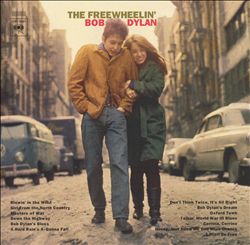
Dylan made his way to New York City in January of 1961, immediately making a substantial impression on the folk community of Greenwich Village. He began visiting his idol Guthrie in the hospital, where he was slowly dying from Huntington's chorea. Dylan also began performing in coffeehouses, and his rough charisma won him a significant following. In April, he opened for John Lee Hooker at Gerde's Folk City. Five months later, Dylan performed another concert at the venue, which was reviewed positively by Robert Shelton in The New York Times. Columbia A&R man John Hammond sought out Dylan on the strength of the review, and signed the songwriter in the fall of 1961. Hammond produced Dylan's eponymous debut album (released in March 1962), a collection of folk and blues standards that boasted only two original songs. Over the course of 1962, Dylan began to write a large batch of original songs, many of which were political protest songs in the vein of his Greenwich Village contemporaries. These songs were showcased on his second album, The Freewheelin' Bob Dylan. Before its release, Freewheelin' went through several incarnations. Dylan had recorded a rock & roll single, "Mixed Up Confusion," at the end of 1962, but his manager, Albert Grossman, made sure the record was deleted because he wanted to present Dylan as an acoustic folkie. Similarly, several tracks with a full backing band that were recorded for Freewheelin' were scrapped before the album's release. Furthermore, several tracks recorded for the album -- including "Talking John Birch Society Blues" -- were eliminated from the album before its release.
Comprised entirely of original songs, The Freewheelin' Bob Dylan made a huge impact in the U.S. folk community, and many performers began covering songs from the album. Of these, the most significant were Peter, Paul and Mary, who made "Blowin' in the Wind" into a huge pop hit in the summer of 1963 and thereby made Bob Dylan into a recognizable household name. On the strength of Peter, Paul and Mary's cover and his opening gigs for popular folkie Joan Baez, Freewheelin' became a hit in the fall of 1963, climbing to number 23 on the charts. By that point, Baez and Dylan had become romantically involved, and she was beginning to record his songs frequently. Dylan was writing just as fast.
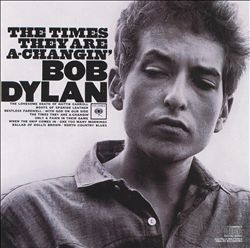
By the time The Times They Are A-Changin' was released in early 1964, Dylan's songwriting had developed far beyond that of his New York peers. Heavily inspired by poets like Arthur Rimbaud and John Keats, his writing took on a more literate and evocative quality. Around the same time, he began to expand his musical boundaries, adding more blues and R&B influences to his songs. Released in the summer of 1964, Another Side of Bob Dylan made these changes evident. However, Dylan was moving faster than his records could indicate. By the end of 1964, he had ended his romantic relationship with Baez and had begun dating a former model named Sara Lowndes, whom he subsequently married. Simultaneously, he gave the Byrds "Mr. Tambourine Man" to record for their debut album. The Byrds gave the song a ringing, electric arrangement, but by the time the single became a hit, Dylan was already exploring his own brand of folk-rock.
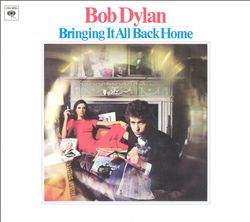
Inspired by the British Invasion, particularly the Animals' version of "House of the Rising Sun," Dylan recorded a set of original songs backed by a loud rock & roll band for his next album. While Bringing It All Back Home (March 1965) still had a side of acoustic material, it made clear that Dylan had turned his back on folk music. For the folk audience, the true breaking point arrived a few months after the album's release, when he played the Newport Folk Festival supported by the Paul Butterfield Blues Band. The audience greeted him with vicious derision, but he had already been accepted by the growing rock & roll community. Dylan's spring tour of Britain was the basis for D.A. Pennebaker's documentary Don't Look Back, a film that captures the songwriter's edgy charisma and charm.
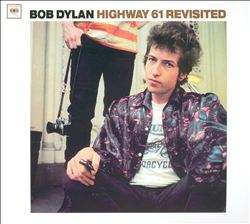
Dylan made his breakthrough to the pop audience in the summer of 1965, when "Like a Rolling Stone" became a number two hit. Driven by a circular organ riff and a steady beat, the six-minute single broke the barrier of the three-minute pop single. Dylan became the subject of innumerable articles, and his lyrics became the subject of literary analyses across the U.S. and U.K. Well over 100 artists covered his songs between 1964 and 1966; the Byrds and the Turtles, in particular, had big hits with his compositions. Highway 61 Revisited, his first full-fledged rock & roll album, became a Top Ten hit shortly after its summer 1965 release. "Positively 4th Street" and "Rainy Day Women #12 & 35" became Top Ten hits in the fall of 1965 and spring of 1966, respectively. Following the May 1966 release of the double album Blonde on Blonde, he had sold over ten million records around the world.
During the fall of 1965, Dylan hired the Hawks, formerly Ronnie Hawkins' backing group, as his touring band. the Hawks, who changed their name to the Band in 1968, would become Dylan's most famous backing band, primarily because of their intuitive chemistry and "wild, thin mercury sound," but also because of their British tour in the spring of 1966. The tour was the first time the British had heard the electric Dylan, and their reaction was disagreeable and violent. At the Manchester concert (long mistakenly identified as the show from London's Royal Albert Hall), an audience member called Dylan "Judas," inspiring a positively vicious version of "Like a Rolling Stone" from Dylan and the band. The performance was immortalized on countless bootleg albums (an official release finally surfaced in 1998), and it indicates the intensity of Dylan in the middle of 1966. He had assumed control of Pennebaker's second Dylan documentary, Eat the Document, and was under deadline to complete his book Tarantula, as well as record a new record. Following the British tour, he returned to America.
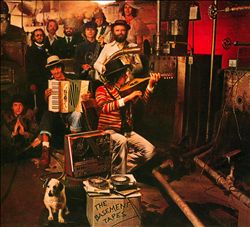
On July 29, 1966, he was injured in a motorcycle accident outside of his home in Woodstock, New York, suffering injuries to his neck vertebrae and a concussion. Details of the accident remain elusive -- he was reportedly in critical condition for a week and had amnesia -- and some biographers have questioned its severity, but the event was a pivotal turning point in his career. After the accident, Dylan became a recluse, disappearing into his home in Woodstock and raising his family with his wife, Sara. After a few months, he retreated with the Band to a rented house, subsequently dubbed Big Pink, in West Saugerties to record a number of demos. For several months, Dylan and the Band recorded an enormous amount of material, ranging from old folk, country, and blues songs to newly written originals. The songs indicated that Dylan's songwriting had undergone a metamorphosis, becoming streamlined and more direct. Similarly, his music had changed, owing less to traditional rock & roll, and demonstrating heavy country, blues, and traditional folk influences. None of the Big Pink recordings was intended to be released, but tapes from the sessions were circulated by Dylan's music publisher with the intent of generating cover versions. Copies of these tapes, as well as other songs, were available on illegal bootleg albums by the end of the '60s; it was the first time that bootleg copies of unreleased recordings became widely circulated. Portions of the tapes were officially released in 1975 as the double album The Basement Tapes.
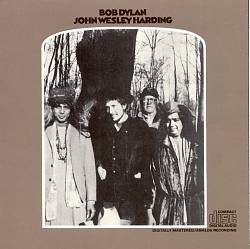
While Dylan was in seclusion, rock & roll had become heavier and artier in the wake of the psychedelic revolution. When Dylan returned with John Wesley Harding in December of 1967, its quiet, country ambience was a surprise to the general public, but it was a significant hit, peaking at number two in the U.S. and number one in the U.K. Furthermore, the record arguably became the first significant country-rock record to be released, setting the stage for efforts by the Byrds and the Flying Burrito Brothers later in 1969.
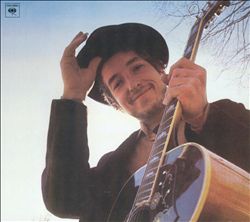
Dylan followed his country inclinations on his next album, 1969's Nashville Skyline, which was recorded in Nashville with several of the country industry's top session men. While the album was a hit, spawning the Top Ten single "Lay Lady Lay," it was criticized in some quarters for uneven material. The mixed reception was the beginning of a full-blown backlash that arrived with the double album Self Portrait. Released early in June of 1970, the album was a hodgepodge of covers, live tracks, re-interpretations, and new songs greeted with negative reviews from all quarters of the press. Dylan followed the album quickly with New Morning, which was hailed as a comeback.
![Dylan [1973]](/images/MI0002243730.jpg)
Following the release of New Morning, Dylan began to wander restlessly. He moved back to Greenwich Village, he finally published Tarantula in November of 1970, and he performed at the Concert for Bangladesh in August 1971. During 1972, he began his acting career by playing Alias in Sam Peckinpah's Pat Garrett and Billy the Kid, which was released in 1973. He also wrote the soundtrack for the film, which featured "Knockin' on Heaven's Door," his biggest hit since "Lay Lady Lay." The Pat Garrett soundtrack was the final record released under his Columbia contract before he moved to David Geffen's fledgling Asylum Records. As retaliation, Columbia assembled Dylan, a collection of Self Portrait outtakes, for release at the end of 1973. Dylan only recorded two albums -- including 1974's Planet Waves, coincidentally his first number one album -- before he moved back to Columbia. The Band supported Dylan on Planet Waves and its accompanying tour, which became the most successful tour in rock & roll history; it was captured on 1974's double live album Before the Flood.
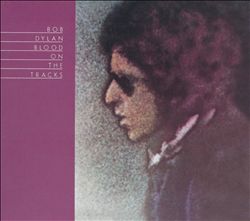
Dylan's 1974 tour was the beginning of a comeback culminating with 1975's Blood on the Tracks. Largely inspired by the disintegration of his marriage, Blood on the Tracks was hailed as a return to form by critics and it became his second number one album. After jamming with folkies in Greenwich Village, Dylan decided to launch a gigantic tour, loosely based on traveling medicine shows. Lining up an extensive list of supporting musicians -- including Joan Baez, Joni Mitchell, Ramblin' Jack Elliott, Arlo Guthrie, Mick Ronson, Roger McGuinn, and poet Allen Ginsberg -- Dylan dubbed the tour the Rolling Thunder Revue and set out on the road in the fall of 1975. For the next year, the Rolling Thunder Revue toured on and off, with Dylan filming many of the concerts for a future film. During the tour, Desire was released to considerable acclaim and success, spending five weeks on the top of the charts. Throughout the Rolling Thunder Revue, Dylan showcased "Hurricane," a protest song he had written about boxer Rubin Carter, who had been unjustly imprisoned for murder. The live album Hard Rain was released at the end of the tour. Dylan released Renaldo and Clara, a four-hour film based on the Rolling Thunder tour, to poor reviews in early 1978.
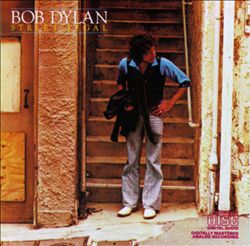
Early in 1978, Dylan set out on another extensive tour, this time backed by a band that resembled a Las Vegas lounge act. The group was featured on the 1978 album Street Legal and the 1979 live album At Budokan. At the conclusion of the tour in late 1978, Dylan announced that he was a born-again Christian, and he launched a series of Christian albums that following summer with Slow Train Coming. Though the reviews were mixed, the album was a success, peaking at number three and going platinum. His supporting tour for Slow Train Coming featured only his new religious material, much to the bafflement of his long-term fans. Two other religious albums -- Saved (1980) and Shot of Love (1981) -- followed, both to poor reviews. In 1982, Dylan traveled to Israel, sparking rumors that his conversion to Christianity was short-lived. He returned to secular recording with 1983's Infidels, which was greeted with favorable reviews.
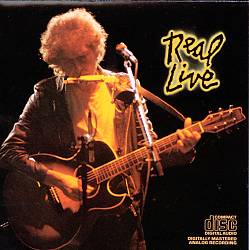
Dylan returned to performing in 1984, releasing the live album Real Live at the end of the year. Empire Burlesque followed in 1985, but its odd mix of dance tracks and rock & roll won few fans. However, the five-album/triple-disc retrospective box set Biograph appeared that same year to great acclaim. In 1986, Dylan hit the road with Tom Petty & the Heartbreakers for a successful and acclaimed tour, but his album that year, Knocked Out Loaded, was received poorly. The following year, he toured with the Grateful Dead as his backing band; two years later, the souvenir album Dylan & the Dead appeared.
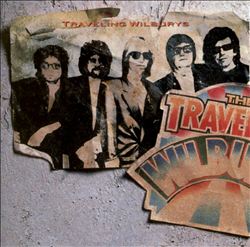
In 1988, Dylan embarked on what became known as "the Never-Ending Tour" -- a constant stream of shows that ran on and off into the late '90s. That same year, he appeared on The Traveling Wilburys, Vol. 1 -- by the supergroup also featuring George Harrison, Roy Orbison, Tom Petty, and Jeff Lynne -- and released his own Down in the Groove, an album largely comprising covers. The Never-Ending Tour received far stronger reviews than Down in the Groove (the Traveling Wilburys album fared much better), but 1989's Oh Mercy was his most acclaimed album since 1975's Blood on the Tracks, due in part to Daniel Lanois' strong production. However, Dylan's 1990 follow-up, Under the Red Sky (issued the same year as the second album by the Traveling Wilburys, now a quartet following the death of Roy Orbison shortly after the release of the Wilburys' first long-player in 1988), was received poorly, especially when compared to the enthusiastic reception for the 1991 box set The Bootleg Series, Vols. 1-3 (Rare & Unreleased), a collection of previously unreleased outtakes and rarities.
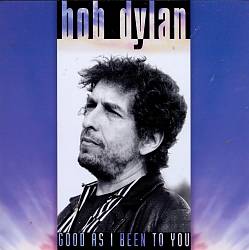
For the remainder of the '90s, Dylan divided his time between live concerts, painting, and studio projects. He returned to recording in 1992 with Good as I Been to You, an acoustic collection of traditional folk songs. It was followed in 1993 by another folk record, World Gone Wrong, which won the Grammy for Best Traditional Folk Album. After the release of World Gone Wrong, Dylan released a greatest-hits album and a live record.
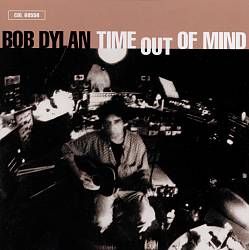
Dylan released Time Out of Mind, his first album of original material in seven years, in the fall of 1997. Time Out of Mind received his strongest reviews in years and unexpectedly debuted in the Top Ten, eventually climbing to platinum certification. Such success sparked a revival of interest in Dylan, who appeared on the cover of Newsweek and began selling out concerts once again. Early in 1998, Time Out of Mind received three Grammy Awards -- Album of the Year, Best Contemporary Folk Album, and Best Male Rock Vocal.
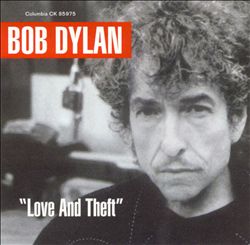
Another album of original material, Love and Theft, followed in 2001 and went gold. Soon after its release, Dylan announced that he was making his own film, to star Jeff Bridges, Penelope Cruz, John Goodman, Val Kilmer, and many more. The accompanying soundtrack, Masked and Anonymous, was released in July 2003. Dylan opted to self-produce his new studio album, Modern Times, which topped the Billboard charts and went platinum in both America and the U.K. It was Dylan's third consecutive album to receive praise from critics and support from consumers, and it was followed three years later in 2009 by Together Through Life, another self-produced effort (as Jack Frost) that also featured contributions from David Hidalgo of Los Lobos and Mike Campbell of Tom Petty & the Heartbreakers. He capped off the year with an old-fashioned holiday effort, Christmas in the Heart. Proceeds from the album were donated to various charities around the world.
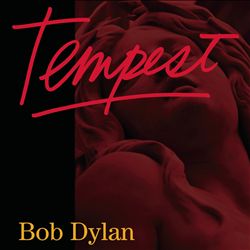
Dylan released the self-produced (again as Jack Frost) Tempest on September 11, 2012; it debuted at three on both the Billboard 200 and the U.K. charts. The next two years brought acclaimed entries in the ongoing Bootleg Series -- 2013 saw the release of Another Self Portrait (1969-1971), which restored the reputation of a much-maligned era, and 2014 saw the long-awaited appearance of The Basement Tapes Complete -- and then Dylan threw a curve ball for his next studio album. Released in February 2015, Shadows in the Night found the singer/songwriter devoting himself to selections from the Great American Songbook in the pre-rock & roll era. Every one of the ten songs had previously been recorded by Frank Sinatra, and Dylan's album was his version of Sinatra's saloon songs, arranged by his own touring band. Shadows in the Night debuted at seven in the U.S. and at number one in the U.K. It was followed in the autumn by the next installment in The Bootleg Series, The Cutting Edge 1965-1966. Available in three editions -- a double-disc distillation, a comprehensive six-disc box, and a complete, limited-edition 18-CD set -- The Cutting Edge 1965-1966 collected unreleased (and unbootlegged) outtakes from the recording of Bringing It All Back Home, Highway 61 Revisited, and Blonde on Blonde.
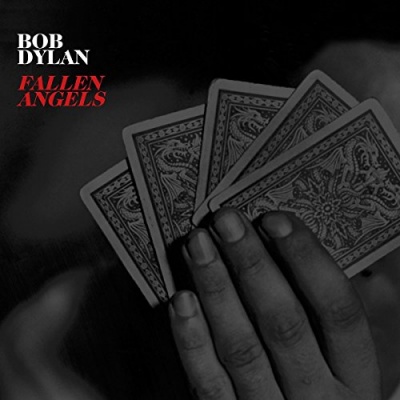
In May 2016, Dylan returned with Fallen Angels, his second Sinatra-inspired collection of songs from the Great American Songbook; it debuted at number seven on the Billboard charts. Later that year, Columbia/Legacy released The 1966 Live Recordings, a 36-disc box set containing every known recording from that pivotal year, but its release was overshadowed by Dylan winning the Nobel Prize for Literature in the autumn of 2016. Dylan continued his exploration of the Great American Songbook with the March 2017 release of Triplicate, a triple album containing three thematically arranged collections of pop standards. Entitled Trouble No More 1979-1981, the 13th volume of The Bootleg Series spotlighted Dylan's Christian era in the early '80s and arrived in November 2017. Live 1962-1966: Rare Performances from the Copyright Collections, a double-disc set of highlights culled from previously released rarities collections, appeared in July 2018. Four months later, the six-disc deluxe version of More Blood, More Tracks: The Bootleg Series, Vol. 14 appeared. It contained all known studio recordings -- full and partial -- that eventually resulted in the classic Blood on the Tracks in 1975. Dylan further explored his 1975 archives in 2019, teaming with director Martin Scorsese for the documentary Rolling Thunder Revue: A Bob Dylan Story by Martin Scorsese. The film appeared in June, accompanied by a 14-disc box called The Rolling Thunder Revue: The 1975 Live Recordings. Later in 2019, The Bootleg Series, Vol. 15: Travelin' Thru -- a triple-disc set concentrating on Dylan's Nashville recordings of the late '60s, highlighted by his sessions with Johnny Cash -- was released.
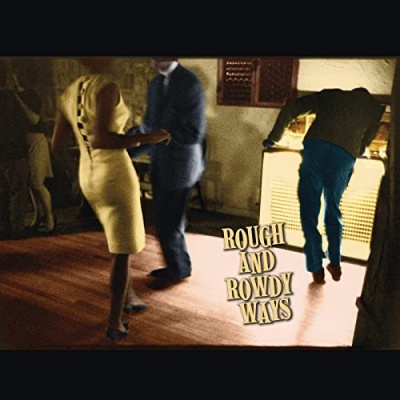
Dylan released "Murder Most Foul," a nearly 17-minute track about the JFK assassination, on March 27, 2020. It was his first original song in eight years, and it was quickly followed by "I Contain Multitudes" and "False Prophet," a pair of singles that announced the arrival of his 39th studio album, Rough and Rowdy Ways, on June 19, 2020. Rough and Rowdy Ways debuted at number one on Billboard upon its release; it entered the U.K. charts at number one. The outtakes collection 1970 -- a set featuring unreleased material from the Self Portrait and New Morning sessions, including recordings with George Harrison -- appeared in February 2021. In September, Springtime in New York: The Bootleg Series, Vol. 16 (1980-1985) was released. Easily one of the artist's most provocative periods, it focused on the years that birthed Shot of Love, Infidels, and Empire Burlesque, with numerous unreleased outtakes, alternate takes, rehearsal recordings, and live performances.
—Stephen Thomas Erlewine