🎡
Artist: Bruce Cockburn

Speechless

🏷️ Acoustic πŸ“… 2005 πŸ’Ώ CD ⭐ ****

Field
Acoustic
Recorded
2005
Label
Cooking Vinyl
Pressing
Eng
Rating
****
Discs
1
Media
CD
Bought
21-Apr-2006
Cost
¤26.00

πŸ“œ Artist Biography

Immensely popular in his native Canada, singer/songwriter Bruce Cockburn has found only cult success south of the border, in spite of a rich, varied body of work and considerable critical nods. He has won numerous Juno Awards and has kept the quality control on most of his albums at a high level.
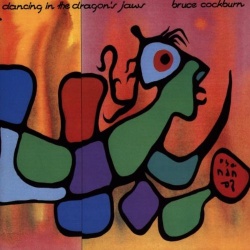
Dancing In The Dragon's Jaw

Cockburn's first decade of work (1970-1979) is largely literate, singer/songwriter folk-rock, often with a strong Christian tone and mystical, devotional lyrics. In 1979, Cockburn had his only major U.S. single, "Wondering Where the Lions Are," which peaked at number 21. The accompanying album, Dancing in the Dragon's Jaw, saw him augmenting his music with worldbeat rhythms, an approach he would continue over his next few albums. Cockburn toned down his Christian viewpoint for much of the '80s, partially as a way of disconnecting himself from the American religious right, which he found antithetical to his own spiritual beliefs, and partially to concentrate on more humanitarian, political subject matter. In 1984, Cockburn produced an AOR hit, "If I Had a Rocket Launcher," whose accompanying video depicted conditions in war-torn Central America and gained a fair amount of MTV play.
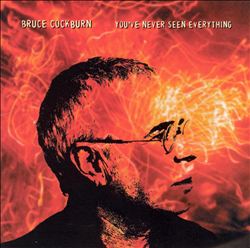
You've Never Seen Everything

Cockburn's later '80s work took on a more streamlined rock sound, and his political agenda was weighted toward environmental concerns, as well as oppression. In the '90s, he returned to the more introspective feel recalling his earlier work, and moved toward a more global and political perspective with issues of the angry and polemical for You've Never Seen Everything in 2003. 2005's Speechless was an all-instrumental affair, showing off the artist's skill on guitar, while the next year's Life Short Call Now showed an artist at the prime of his musical maturity. A live set, Slice o Life: Bruce Cockburn Live Solo, arrived in 2009. After a brief tour, Cockburn returned to the studio in 2010, where he finished work on a new collection entitled Small Source of Comfort, which was released in early 2011; it is an intimate set of songs and guitar-based instrumentals (including the live but never recorded Cockburn standard "The Gift"). The album was produced by Colin Linden and features violinist Jenny Scheinman. After the birth of his daughter Iona that year, Cockburn faded into the backdrop to focus on family and writing his autobiography. He also assembled the 11-disc career-spanning box set, Rumours of Glory, which was issued in 2014. His memoir of the same title was published in 2016. Inspired by a book of poems by 20th century Canadian poet Al Purdy, Cockburn set to work writing new material and entered a California studio with Linden as producer/guitarist, his road band, and guests including cornetist Ron Miles and Mary Gauthier. The finished album, Bone on Bone (his 33rd) was issued by True North on September 15, 2017, a week before Cockburn was inducted -- along with Neil Young, Beau Dommage, and StΓ©phane Venne, into the Canadian Songwriters Hall of Fame.

—Steve Huey

✍️ Record Review

Speechless is proof in the pudding that you can teach an old dog new tricks. Old dog? Take a look at Bruce Cockburn's photo in the CD booklet. Speechless is the singer/songwriter's first foray into completely instrumental territory. There are 15 tracks here, the vast majority of which are redos of tracks from Cockburn's catalog. But given their treatment -- many of them done as solo guitar pieces -- the dearth of new material doesn't even matter. In fact, one could venture to say that these feel like altogether new pieces. Cockburn is a master guitarist; he often interweaves jazz, blues, country, and folk styles into his cross-genre songs. Here he shines, pure and simple. "Train in the Rain" (anyone notice how many of his songs are about trains and travel?) touches on Leo Kottke and Peter Lang; "Water into Wine" utilizes flamenco stylings while crossing into Gypsy jazz chords Γ  la Charlie Byrd. A new work, "Elegy," kisses the modalities of "Greensleeves" while creating itself as a piece that evokes both absence and memory. "Rouler Sa Bosse" from Salt, Sun and Time juxtaposes Cockburn's six-string against Jack Zaza's clarinet, and becomes a straight-up gently swinging jazz tune. The set also includes "Rise and Fall," a sought-after trio track that was previously available only in Japan. Cockburn's steel-string is accented by his playing of bells, George Koller on bass, and drummer, Ben Riley! The new version of "When It's Gone, It's Gone" showcases an entire band that includes Booker T. Jones on organ and Edgar Meyer on bass, and is the only electric tune on the set. Another new work, "The End of All Rivers," is a multi-tracked tune that has Cockburn playing not only guitar but Tibetan bowl, a Navajo flute, and a baritone guitar, which are all threaded though the melody as a digital delay marks time with his standard acoustic. It's spooky, elegiac, and utterly beguiling. The set ends with a down-home solo read of the title track from Sunwheel Dance. The most remarkable thing about Speechless is that, although it lies firmly in its own subcategory in Cockburn's catalog, it remains, despite the improvisation and textures, a recording of songs. The composer's need to establish that fact even in abstraction and extrapolation is commendable. Speechless is not only accessible -- it's downright beautiful, poetic, and seductive.

— Thom Jurek


So pronounced is Bruce Cockburn's reputation as a celebrated singer-songwriter that it's easy to overlook the fact that Cockburn is also an exceptional guitarist. Speechless should change all that. A collection of previously recorded and brand new instrumental tracks, the album puts the spotlight squarely on Cockburn's brilliant acoustic guitar playing. Despite its absence of words, Speechless is highly expressive. Ranging from some of his earliest numbers to three recent compositions, the album showcases the breadth of Cockburn's eclectic guitar style. There's a strong cinematic quality to much of the album, whether it's in pieces from the 1970s like the haunting "Islands in a Black Sky" and the cascading "Water into Wine," or else in 1990s instrumentals such as the emotional "When It's Gone It's Gone" and the ambient "Mistress of Storms."

— Amazon