🎡
Artist: Led Zeppelin

Led Zepplin

🏷️ Rock πŸ“… 1969 πŸ’Ώ CD ⭐ ****

Field
Rock
Recorded
1969
Label
Atlantic
Pressing
Am
Rating
****
Discs
1
Media
CD
Bought
08-Jul-2006
Cost
¤10.00

πŸ“œ Artist Biography

What the Beatles were to the '60s, Led Zeppelin were to the '70s: a band so successful and innovative they wound up creating the prism through which their entire epoch was seen. Zeppelin ushered in the era of album rock -- they refused to release singles off their albums, even when they were garnering massive radio play -- and of arena rock, playing ever-larger stadiums as their ticket sales skyrocketed. Other bands played on a similar field but Led Zeppelin carried a unique mystique cultivated by cryptic album art, distance from the press, and, of course, their music. Drawing upon postwar electric blues, early rock & roll, and psychedelia, Zeppelin created a titanic roar in their earliest days but even then they weren't merely heavy. Underneath the wattage, there was a strong undercurrent of folk-rock and the quartet would soon thread in world music, funk, country, and synthesizers, creating an adventurous body of work that had a long, lasting influence on hard rock, heavy metal, and alternative rock.
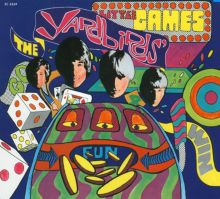
Little Games

Quite a feat for a band whose origins lie in the ashes of the pioneering British rock band the Yardbirds. Jimmy Page, a guitarist who made his reputation as a sessionman in the '60s, joined the band in 1966, functioning as the replacement for bassist Paul Samwell-Smith, but he soon split lead guitar duties with Jeff Beck and took over that position entirely once Beck departed. Page contributed heavily to the band's final album, 1967's Little Games, which also saw contributions from John Paul Jones, a bassist and string arranger who also ran in the same studio circles as Page; the two played on Beck's 1966 single "Beck's Bolero," which also featured Keith Moon. Under the direction of their new manager Peter Grant, the Yardbirds supported the album with a tour of the United States, but the group was in its final days. Just before the band's dissolution, Page filled the time with session work, including a spring 1968 session where he played on Jones' arrangement of Donovan's "Hurdy Gurdy Man." During the sessions, Jones requested to be part of any future project of Page's. This future project materialized quickly. In the summer of 1968, the Yardbirds' Keith Relf and James McCarty left the band, leaving Page and bassist Chris Dreja with the rights to the name, along with the obligation of fulfilling an upcoming fall tour. Page set out to find a replacement vocalist and drummer. Initially, he wanted to enlist singer Terry Reid and Procol Harum's drummer B.J. Wilson, but neither musician was able to join the group. Reid suggested that Page contact Robert Plant, who was singing with a band called Hobbstweedle
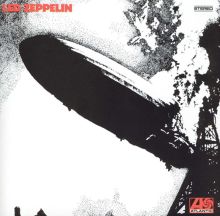
Led Zeppelin

After hearing him sing, Page asked Plant to join the band in August of 1968, the same month Chris Dreja dropped out of the new project. Following Dreja's departure, John Paul Jones joined the group as its bassist. Plant recommended that Page hire John Bonham, the drummer for Plant's old band, the Band of Joy. Bonham had to be persuaded to join the group, as he was being courted by other artists who offered the drummer considerably more money. By September, Bonham agreed to join the band. Performing under the name the New Yardbirds, the band fulfilled the Yardbirds' previously booked Scandinavian engagements in late September 1968. The following month, they recorded their debut album in just under 30 hours. Also in October, Dreja informed Page he had the rights to the New Yardbirds name for the live dates only, so the group switched its name to Led Zeppelin. Grant helped the band sign a record-setting contract with Atlantic Records in the United States before the end of the year; they were paid a reported $200,000 advance, at that date the largest sum for any new band. Early in 1969, Led Zeppelin set out on their first American tour, which helped set the stage for the January release of their eponymous debut album. Two months after its release, Led Zeppelin had climbed into the U.S. Top Ten. Throughout 1969, the band toured relentlessly, playing dates in America and England. While they were on the road, they recorded their second album, Led Zeppelin II, and that speed gave the record's loud, riff-heavy blues a palpable urgency.
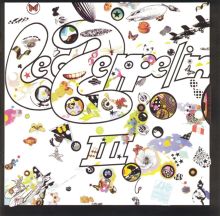
Led Zeppelin III

Like its predecessor, Led Zeppelin II was an immediate hit upon its October 1969 release, topping the American charts two months after its release and spending seven weeks at number one. The album helped establish Led Zeppelin as an international concert attraction, and for the next year, the group continued to tour relentlessly. Led Zeppelin started to broaden their horizons with Led Zeppelin III. Recorded in a cottage in Wales and released in October of 1970, the album saw them weaving British folk into their heavy rock, a hybrid that deepened the band's sound. Led Zeppelin III reached number one in both the U.K. and U.S. but, comparatively, sales were softer for this record than the two previous blockbusters; it never earned a platinum certification in the U.K. but, over the years, it went platinum six times in the U.S., a sign of its reputation as one of band's most distinctive records. Despite Zeppelin's stated aversion to singles, they did support III with the release of "Immigrant Song" as a 7" in the States, backed with the non-LP "Hey, Hey What Can I Do," their only B-side to not appear on an album. Led Zeppelin didn't tour as heavily behind Led Zeppelin III as they did Led Zeppelin II, but they were well on their way to consolidating their status as one of the most popular attractions in rock. Their next record, an untitled record commonly referred to as Led Zeppelin IV, cemented that reputation. Released in November 1971, Led Zeppelin IV merged the heavy blues of II with the folk mysticism of III and at the crossroads of those two extremes lay "Stairway to Heaven," an eight-minute epic that encapsulated much of Zep's majesty. "Stairway to Heaven" was an immediate radio hit, eventually becoming the most played song in the history of album-oriented radio; the song was never released as a single. Despite the fact that the album never reached number one in America, Led Zeppelin IV was their biggest album ever, selling well over 37 million copies over the next four decades.
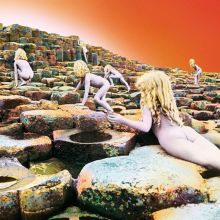
Houses of the Holy

Led Zeppelin supported Led Zeppelin IV with their biggest tour to date -- biggest according to size, not dates. All around the world they made the leap into stadiums and sports arenas, pioneering a circuit that became commonplace later in the decade, leaving legends of excess along the way. After completing their 1972 tour, they retreated from the spotlight and recorded their fifth album, Houses of the Holy. Appearing in March 1973, Houses of the Holy found them weaving in touches of funk and reggae amidst their crunching rock and seven-minute epics. Once again, Zeppelin had another smash album on their hands and its success led to an American tour that broke box-office records -- most of which were previously held by the Beatles. The band's tour culminated in a three-night stand at New York's Madison Square Garden in July 1973, a stint that was filmed and released as the concert film The Song Remains the Same in 1976. Following this record-breaking tour, Led Zeppelin spent a quiet year during 1974, releasing no new material and performing no concerts. They did, however, establish their own record label, Swan Song, which released all of Led Zeppelin's subsequent albums, as well as records by Dave Edmunds, Bad Company, the Pretty Things, and several other acts. Physical Graffiti, a double album released in February of 1975, was the band's first release on Swan Song. The album was an immediate success, topping the charts in both America and England. Led Zeppelin launched an international tour with a five-night stint at London's Earls Court but on the eve of the American leg that fall, Robert Plant and his wife suffered a serious car crash while vacationing in Greece. The tour was canceled and Plant spent the rest of the year recuperating from the accident.
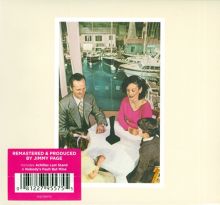
Presence

As Plant recovered, the band headed to Malibu to record a new album. The resulting Presence appeared in the spring of 1976 and while it debuted at number one in both the U.S. and U.K., sales lagged slightly, possibly due to the band's decision not to tour in support of the album. Instead, they released the film The Song Remains the Same, which appeared in the fall of 1976; its soundtrack peaked at number one in the U.K. and number two in the U.S. Zeppelin finally returned to the stage in the spring of 1977 with a tour of the United States (the U.K. was off limits, as the band decided to take a tax exile). The concerts raked in money but nearly three months into the tour, Plant's six-year-old son Karac died of a stomach infection. Led Zeppelin immediately canceled the tour and offered no word whether or not it would be rescheduled, causing widespread speculation about the band's future. For a while, it did appear that Led Zeppelin were finished. Robert Plant spent the latter half of 1977 and the better part of 1978 in seclusion. The group didn't begin work on a new album until late 1978, when they began recording at ABBA's Polar Studios in Sweden. A year later, the band played a short European tour, performing in Switzerland, Germany, Holland, Belgium, and Austria. In August of 1979, Led Zeppelin played two large concerts at Knebworth; the shows were their first English performances in four years and would be their last English concerts.
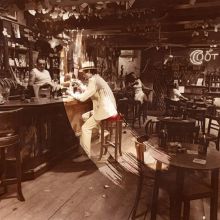
In Through the Out Door

In Through the Out Door, the band's much-delayed eighth studio album, was finally released in September of 1979. The album entered the charts at number one in both America and England. In May of 1980, Led Zeppelin embarked on their final European tour. In September, they began rehearsing at Jimmy Page's house in preparation for an American tour. On September 25, John Bonham was found dead in his bed -- following an all-day drinking binge, he had passed out and choked on his own vomit. In December of 1980, Led Zeppelin announced they were disbanding, since they could not continue without Bonham.
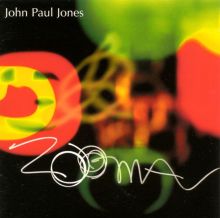
Zooma

Following the breakup, the remaining members all began solo careers. John Paul Jones returned to producing and arranging; for years, he remained in a behind-the-scenes capacity, waiting until 1999 to release his solo debut, Zooma. After recording the soundtrack for Death Wish II, Jimmy Page compiled the Zeppelin outtakes collection Coda, which was released at the end of 1982. That same year, Robert Plant began a solo career with Pictures at Eleven. In 1984, Plant and Page briefly reunited in the all-star oldies band the Honeydrippers. After recording one EP with the Honeydrippers, Plant returned to his solo career and Page formed the Firm with former Bad Company singer Paul Rodgers. In 1985, Led Zeppelin reunited to play Live Aid, supported by drummers Phil Collins and Tony Thompson, sparking off a flurry of reunion rumors; the reunion never materialized. In 1988, the band re-formed to play Atlantic's 25th anniversary concert, this time playing with John Bonham's son, Jason. During 1989, Page remastered the band's catalog for release on the 1990 box set Led Zeppelin. At the time, the four-disc set became the biggest-selling multi-disc box set of all time, which was followed up three years later by another box set, the mammoth ten-disc set The Complete Studio Recordings.
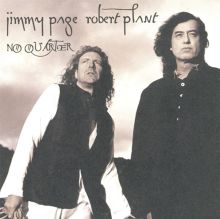
No Quarter

In 1994, Page and Plant reunited to record a segment for MTV Unplugged, which was released as No Quarter in the fall of 1994. Although the album went platinum, the sales were disappointing considering the anticipation of a Zeppelin reunion. The following year, Page and Plant embarked on a successful international tour, which eventually led to an all-new studio recording in 1998, the Steve Albini-produced Walking into Clarksdale. Although it received some positive reviews, the album wasn't a massive hit -- it went gold only in America -- and Page and Plant ended their union shortly thereafter; Page went on to tour with the Black Crowes, while Plant resumed his solo career. Further Zeppelin archival releases saw the light of day in the late '90s, including 1997's stellar double-disc BBC Sessions, plus Zep's first official hits compilations -- 1999's Early Days: The Best Of, Vol. 1 and 2000's Latter Days: The Best Of, Vol. 2 -- and How the West Was Won, a 2003 compilation featuring live highlights from Zeppelin's Los Angeles concerts in 1972. That same year, the band released an acclaimed 2003 double-DVD set of live performances from 1969-1979. A full reunion of the surviving members of the band, with Jason Bonham filling in for his father on drums, took place in 2007 when the group played a historic concert at London's 02 in memory of Atlantic Records founder Ahmet Ertegun. The set was filmed and recorded, and finally appeared as a commercial release under the title Celebration Day in the fall of 2012.
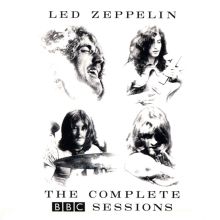
The Complete BBC Sessions

In 2014, Led Zeppelin launched a massive catalog campaign supervised by Jimmy Page, containing newly remastered versions of all their albums, available on CD, high-resolution downloads, and vinyl. Additionally, there were Deluxe Editions containing previously unreleased material from the vaults. The first round of reissues contained the band's first three albums and appeared in June 2014; the last round appeared in July 2015. The group also released The Complete BBC Sessions in 2016, an updated and expanded edition of their 1997 collection BBC Sessions. The compilation included eight previously unreleased recordings, among them a long-lost radio session featuring the tracks "You Shook Me," "Sunshine Woman," and "I Can't Quit You Baby." In 2018, an expanded version of How the West Was Won appeared in March and a Super Deluxe Edition of The Song Remains the Same showed up in September.

— Stephen Thomas Erlewine

✍️ Record Review

Led Zeppelin had a fully formed, distinctive sound from the outset, as their eponymous debut illustrates. Taking the heavy, distorted electric blues of Jimi Hendrix, Jeff Beck, and Cream to an extreme, Zeppelin created a majestic, powerful brand of guitar rock constructed around simple, memorable riffs and lumbering rhythms. But the key to the group's attack was subtlety: it wasn't just an onslaught of guitar noise; it was shaded and textured, filled with alternating dynamics and tempos. As Led Zeppelin proves, the group was capable of such multi-layered music from the start. Although the extended psychedelic blues of "Dazed and Confused," "You Shook Me," and "I Can't Quit You Baby" often gather the most attention, the remainder of the album is a better indication of what would come later. "Babe I'm Gonna Leave You" shifts from folky verses to pummeling choruses; "Good Times Bad Times" and "How Many More Times" have groovy, bluesy shuffles; "Your Time Is Gonna Come" is an anthemic hard rocker; "Black Mountain Side" is pure English folk; and "Communication Breakdown" is a frenzied rocker with a nearly punkish attack. Although the album isn't as varied as some of their later efforts, it nevertheless marked a significant turning point in the evolution of hard rock and heavy metal.

[Led Zeppelin launched a massive reissue campaign in 2014, supervised by Jimmy Page. The album proper has been remastered but the centerpiece for this deluxe edition, as it is for its companion reissues, is an additional disc of unreleased bonus material. Page dug through the Zeppelin archives to find rare -- and often un-bootlegged -- recordings, relying on alternate mixes and backing tracks but occasionally excavating unheard songs. However, the music contained on the deluxe edition of Led Zeppelin does not fall into these categories. The entire disc of bonus material is dedicated to a concert given at the Olympia in Paris in 1969, right between the recordings of the debut LP and Led Zeppelin II. This tape has been bootlegged before; indeed, it came to Page's attention relatively recently -- somewhere between the release of Mothership and Celebration Day -- and it was e-mailed to him by a fan. What's presented here is edited slightly from that version -- "How Many More Years" suffers the most, cut from its original 20 minutes by nearly ten minutes, and there are slices made to the guitar solo on "Heartbreaker" and "Moby Dick" has been truncated -- but most listeners won't much care because what's presented is so powerful. Often, the group drifts into endless jams -- "Dazed and Confused" clocks in at 15 minutes, "You Shook Me" at nearly 12 -- but this never seems ponderous, possibly because it opens with a version of "Good Times Bad Times" that the group quickly abandons for an insanely fast "Communication Breakdown," playing it as if they were sprinting to the finish. It's not tight but that's its appeal, as it shows how the band was a vital, living beast, playing differently on-stage than they did in the studio. This is also true of the liquid psychedelia of their blues -- they never miss an opportunity to sink into an endless groove but there's a kineticism to the interplay that almost always prevents it from seeming ponderous (the exception is, as ever, "Moby Dick," whose success relies entirely on your personal taste for drum solos). Zeppelin never felt this nervy again: they harnessed their majesty and knew how to deploy it, but here it still seems like they weren't quite sure of their limits, which is why it's a particularly exciting bonus disc.]

— Stephen Thomas Erlewine - 2015

As time moves on and "The 60s" and "The 70s" become not so much historical periods as media creations, it's harder to take for granted what the significant cultural touchstones of those eras actually mean to current-day society. Some of the artists that were once universally appreciated are slipping from memory, while others are having difficulty translating to new generations. The furor greeting each new Beatles enterprise shows their music and image are indeed proving timeless, and they remain relevant for teenagers and septuagenarians alike—but other giants from the late 1960s and early 70s aren't having it so easy. The Who's stock has plummeted in the last decade, and it's getting tougher to find anyone under 35 who cares about a note of their music made after 1971. The Rolling Stones have been at it so long that it's difficult for younger people to believe that they were once actually good. Pink Floyd still reach some alienated kids, but their most devoted fans are among the graybeard audiophile set. And then there's Led Zeppelin.

Zeppelin occupies a unique place among this group of bands, in part because their position was hard to pin down while they were active. They were unimaginably popular from 1969 to 1980, but critical respect was elusive. Their suspect reputation has been somewhat overstated (in the U.S., Rolling Stone panned them early on but eventually came around, while Creem and Circus took them seriously all along) but Led Zeppelin never quite registered with the intelligentsia. They made the heaviest hard rock records ever recorded, but their lyrics tended toward loopy mysticism when they weren't either stealing ideas outright or wallowing in a kind of hedonism where misogyny was a given.

In 2014, Led Zeppelin is typically viewed through one of three lenses: those among the 50-plus set who were actually there hear their music with a nostalgic ear, remembering the days of their youth. There are those who grew up with the assumption that Led Zeppelin were important—let's say 30 to 50 years old—hear them filtered through a second wave of nostalgia, from movie titles like Dazed and Confused and the memory of classic rock radio. To these people (including me), Zeppelin defined an otherworldly image of '70s rock deities, conquering the world on the strength of volume, arena shows, and the baddest riffs the world had ever heard. And then there's the younger set for whom Zep might seem a little comical, a faintly embarrassing relic from another era even as a certain amount of the music remains undeniable. In one sense, this latter group have more in common with the skeptical critics of the first wave, possessing expectations of "what music should be" that don't necessarily apply for a band that sounds like this.

These reissues of Zeppelin's first three albums are an attempt to reach all of these people, using every tool at the band and label's disposal. The primary reason these sets are being presented and received as a Big Deal is that they are the first reissues of the digital era (and here I'm using the term to include CDs, which means we're going back more than 30 years) to include bonus material. The reissues are remastered and are packaged with bonus discs that include previously unreleased live material and studio cuts. The PR push surrounding a big reissue in 2014 inevitably involves sharing things that can spread on social media and hence reach younger kids, while other elements—unheard versions, improved sound—ostensibly entice older fans to re-buy the records.

Jimmy Page, always Led Zeppelin's sonic architect, heard the blues differently. He heard it as sound first, rather than a form or tradition or product of personalities—maybe that's why he felt so cavalier about "borrowing" from blues records without attribution, since you can't copyright a sound—and he understood the trance-inducing element of blues repetition better than anyone: blues as a consciousness-expanding ritual. All of this is clear from the very beginning, as Led Zeppelin is one of music's most assured and fully realized debuts; individually, Jimmy Page, John Paul Jones, and John Bonham were great players, but the whole of their sound somehow exceeded the sum of its parts. But even above the instrumental virtuosity, Led Zeppelin is a triumph of production, each part clear and forceful but adding up to something even more powerful.

Just about everything Zep would do at one point is presented here somewhere—trance-rock ("Dazed and Confused"), gorgeous acoustic folk ("Black Mountain Side"), catchy guitar pop ("Good Times Bad Times"), updates on straight blues ("I Can't Quit You Baby"). They'd do most of these things better later, but this is where they appeared first. Zep sounded so brilliant right out of the gate because Page was already a veteran of the music scene when they started; working as a session guitarist and later with the Yardbirds, he took in the scene and saw what was missing. As much as Zeppelin understood music, at this point words were more or less just sounds.

Led Zeppelin also set the tone for a decade of dippy lyrics. If Zep was never accepted as hip in some circles, it's partly because of the knuckle-dragging worldview of songs like "Dazed and Confused". It's hard not to laugh or cringe in 2014 when hearing a line like "Every day I work so hard, bringin' home my hard-earned pay/ Try and love you baby but you push me away," but it's equally difficult not to acknowledge that Robert Plant delivers them with a certain histrionic power. And then a bar later, John Bonham's slow fills and Page's terrifying guitar screech come in, and the true meaning of the music is found.

It's truly impossible to oversell how brilliantly these records are produced; "rock" as an idea is really a '70s idea, and Led Zeppelin established what that would mean and what it would sound like, which was as much a matter of arrangement as it was knowing where to set the microphones, how high to mix the bass. You can hear that on the bonus disc to the first album, which was recorded live in Paris in 1969 and aired on radio. The recording fidelity, for a release by such a major band, is remarkably poor—which goes to show how well the vaults have already been cleared out—but there's no doubting just how much this band could rip in their first year. Of particular note is the attack of Plant's singing, as he comes over like the unhinged 22-year-old he was. The earliest live recordings by bands are so exciting in large part because the vocalist hasn't yet learned how to pace himself; Plant sings these songs like Zeppelin might last a year and this is his one chance to get it right. By the late '70s, purely as a matter of survival, he'd learn how to coast on stage.

There is no arguing with a riff. It's a conversation-ender, something resistant to analysis that strips away the intellectual to situate the music in a purely physical space. Of the 100 greatest guitar riffs in the history of rock music, Jimmy Page might have written 20, and a good number of those can be found on Led Zeppelin's second album from 1969. If you or someone close to you has ever been within 10 feet of a radio tuned to a classic rock station, you've heard them all, many times—maybe too many. For every young person who discovers "Whole Lotta Love" and "Heartbreaker" and "Living Loving Maid (She's Just a Woman)", there's an older person who gets sick of them from overplay and doesn't need to ever hear them again. Part of the challenge and excitement of revisiting a record upon reissue is trying to hear the music again with fresh ears, seeing if you can tap into that feeling of discovery that came from hearing it the first time. When I'm able to mentally put myself into this place— the kid who got his driver's license a month ago, driving around listening to II on tape—the reissue sounds as thrilling as ever.

Every track on this record is musically brilliant, and in the span of just a few months it's amazing how much Page had enriched the band's sound. Chiming acoustic guitars provide the contrast to the crunch in a whole new way on "Ramble On" and "Thank You", offering yet another template for mixing folk with proto-metal. "Whole Lotta Love" might have gotten the band sued by Willie Dixon, but there was no sonic precedent for it in rock music—it's a sound that would have been unimaginable without the rise of drug culture. If you are not a drummer, it's hard to imagine listening to "Moby Dick" very often, but better evidence of John Bonham's genius is found elsewhere on the record. Zep's rhythmic underpinning, especially the locked-in tandem of Jones and Bonham, was always their secret weapon, the thing that divided them from contemporaries like Black Sabbath. They could swing, they loved James Brown and Motown, and they took pride in the fact that people would dance at their shows. The bonus disc is a mildly interesting amalgam of alternate mixes and rough takes—the kind of stuff anyone but the most dedicated obsessives will listen to only once—and there's little advance here lyrically from the debut, but II is still close to perfect.

III is, indirectly, Led Zeppelin's own version of Pink Floyd's Meddle—the folky, pretty early record that was never too popular and hence a favorite of indie types skeptical of such a massive mainstream band. That it opens with "Immigrant Song", one of their top few rockers, only makes the later acoustic loveliness that much more affecting. The strings laid atop the acoustic guitar on "Friends" foreshadow "Kashmir"; "Tangerine" has an amazing tension between the minor-key verses and the open, joyous chorus, as good an example of any of Zep as a pop band. The melancholy ache of "That's the Way" is Zep with their guard down—it goes down as easy as a great Cat Stevens song—and then by the end of the record things start to get a little weird, with the heavy acoustic hoedown of "Bron-Y-Aur Stomp" and the acid-fried chug of the blues standard "Shake 'em on Down", a nod to the hypnotic one-chord version by Mississippi Fred McDowell. III has easily the best bonus material too, including a fantastic unreleased version of the old blues song "Keys to the Highway". Depending on your age, you might remember III as "the one with the Viking kittens song" or "the one with that pretty song that played during an interlude of Almost Famous"; for someone who doesn't necessarily want to be inundated with songs and riffs that became clichΓ©s, it might be the best place to start.

For some, the interest in these sets is the remastering, an alleged improvement in sound, which makes sense for a band so song-oriented. I've always thought that Zeppelin, like Neil Young, were best heard from nice-sounding pressings from the '70s that were utterly ubiquitous in used LP bins in the '80s and '90s. Back then, you could collect the entire Zeppelin catalog for something like $30, where the inferior sounding early CD masters would run you more like $150.

These days the gap between different versions seems to be closing. I attended a listening session for these reissues in New York, hosted by Jimmy Page, and at one point he was asked which version sounded best, vinyl or CD. Page responded with saying the best version was the original analog tape, but "unfortunately I can't invite you all 'round to listen to it." Suffice to say that these remasters sound very good, a bit louder but not overly so, but we're likely reaching a point of diminishing returns. That said, I'm very glad these new remasters and the attendant publicity push exist, to get us all listening to and talking about Led Zeppelin again, where they stand and what they might mean. However you feel about them and their brand of ultra-huge arena rock, there has never been another band like them, before or since.

— Mark Richardson, Pitchfork