🎡
Artist: Bruce Cockburn

Life Short Call Now

🏷️ Rock πŸ“… 2005 πŸ’Ώ CD ⭐ ****

Field
Rock
Recorded
2005
Label
Cooking Vinyl
Pressing
Am
Rating
****
Discs
1
Media
CD
Bought
04-Aug-2006
Cost
¤25.00

πŸ“œ Artist Biography

Immensely popular in his native Canada, singer/songwriter Bruce Cockburn has found only cult success south of the border, in spite of a rich, varied body of work and considerable critical nods. He has won numerous Juno Awards and has kept the quality control on most of his albums at a high level.
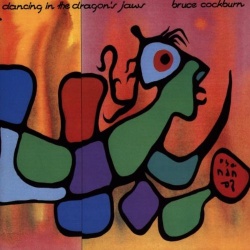
Dancing In The Dragon's Jaw

Cockburn's first decade of work (1970-1979) is largely literate, singer/songwriter folk-rock, often with a strong Christian tone and mystical, devotional lyrics. In 1979, Cockburn had his only major U.S. single, "Wondering Where the Lions Are," which peaked at number 21. The accompanying album, Dancing in the Dragon's Jaw, saw him augmenting his music with worldbeat rhythms, an approach he would continue over his next few albums. Cockburn toned down his Christian viewpoint for much of the '80s, partially as a way of disconnecting himself from the American religious right, which he found antithetical to his own spiritual beliefs, and partially to concentrate on more humanitarian, political subject matter. In 1984, Cockburn produced an AOR hit, "If I Had a Rocket Launcher," whose accompanying video depicted conditions in war-torn Central America and gained a fair amount of MTV play.
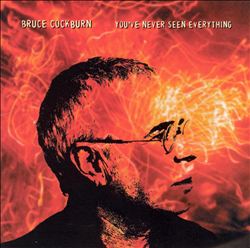
You've Never Seen Everything

Cockburn's later '80s work took on a more streamlined rock sound, and his political agenda was weighted toward environmental concerns, as well as oppression. In the '90s, he returned to the more introspective feel recalling his earlier work, and moved toward a more global and political perspective with issues of the angry and polemical for You've Never Seen Everything in 2003. 2005's Speechless was an all-instrumental affair, showing off the artist's skill on guitar, while the next year's Life Short Call Now showed an artist at the prime of his musical maturity. A live set, Slice o Life: Bruce Cockburn Live Solo, arrived in 2009. After a brief tour, Cockburn returned to the studio in 2010, where he finished work on a new collection entitled Small Source of Comfort, which was released in early 2011; it is an intimate set of songs and guitar-based instrumentals (including the live but never recorded Cockburn standard "The Gift"). The album was produced by Colin Linden and features violinist Jenny Scheinman. After the birth of his daughter Iona that year, Cockburn faded into the backdrop to focus on family and writing his autobiography. He also assembled the 11-disc career-spanning box set, Rumours of Glory, which was issued in 2014. His memoir of the same title was published in 2016. Inspired by a book of poems by 20th century Canadian poet Al Purdy, Cockburn set to work writing new material and entered a California studio with Linden as producer/guitarist, his road band, and guests including cornetist Ron Miles and Mary Gauthier. The finished album, Bone on Bone (his 33rd) was issued by True North on September 15, 2017, a week before Cockburn was inducted -- along with Neil Young, Beau Dommage, and StΓ©phane Venne, into the Canadian Songwriters Hall of Fame.

—Steve Huey

✍️ Record Review

Bruce Cockburn displayed his aesthetic restlessness with his instrumental album Speechless in 2005. Those who have followed his career over the past four decades wondered where he would go next, or indeed if there was anywhere he could go. The question has been answered in spades on Life Short Call Now. Along with his regular band, Cockburn has employed an orchestral 27-piece string section to expressionistically color a good number of these 12 songs with help from producer Jon Goldsmith. Lyrically, Cockburn has returned to the terrain he alone inhabits: intimate observations of the personal, the spiritual, the sociopolitical and environmental concerns. As is also his wont, there are no sloganeering anthems in these songs. Form the title track that opens the album he looks across the Montreal landscape and observes it, not in a journalistic way, but as someone inside it, and he asks poignantly. "Can one man fit in a normal life?" The solitary person in the midst of unions, holy and unholy, can find no way to properly say goodbye or welcome.

Ani DiFranco sings backing vocals on "See You Tomorrow," where Cockburn turns the tables on himself as he observes a mercenary, and though he understands the man's empty soul he envies his freedom from guilt to accomplish his task. Isolation in the midst of watching women walk mirrors the pain of sin and of loneliness for the beloved and seeks wholeness which he expresses that beyond "these chains of flesh" there is completion. The gentleness of his approach is also notable. Cockburn isn't raging here, he's expressing the hidden, the unseen, the unspeakable. Check the lovely, languid folk song "Mystery," where he embraces what is unknowable infinitely despite his fear and his hunger for it. A four-piece horn section adorns the mix on the outside, underscoring the questions in the grain of the singer's voice. What happens as the record unfolds is the work of a poet who happens to be a brilliant musician, who has refined his craft not as an aesthete, but as a hands-dirtied participant not only in the process, but in its realization: check the gorgeous falsetto that croons above the swell of strings in "Beautiful Creatures." He asks straight up, from the gut: "When the skin is peeled off it/What is there to say?" And then says it: The beautiful creatures are/going away..."

In many ways, there is a tenderness here that Cockburn's listeners haven't encountered since "Humans," where fear, desire, shock, awe and boundless love poured from his songs. And they do so here, too, tempered by a bloody but unbowed veteran of love, despair, spiritual hunger, desolation and the acknowledgement of community. Always a guitar to accompany that voice, always six strings whispering through the singer and carrying him through not only emotions, but scenes, places, times, encounters, to be able to speak clearly and directly, yet softly, with one exception: "This Is Baghdad." Here the observer battles the brokenness inside himself as he observes -- Cockburn spent part of 2004 there -- the mindless destruction for the sake of nothing whatsoever. The display of might by American troops under the guidance of a fearful leader is revealed for what it is: the display of power for its own sake, which is for the sake of nothing. The deep end of the string section hovers around his 12-string, and the hypnotic pulse of Gary Craig's drums.

There are three fine instrumentals here as well. "Peace March," is driven by that now-trademark fluid guitar kissed with a brushed snare, a tempered bassline which reveals the refined texture of a master painter. "Jerusalem Poker" with its handclapped percussion is a jazz tune with its syncopated guitar and muted flugelhorn. The album's final cut, too, named for Marcel Duchamp's infamous "Nude Descending a Staircase" is introduced by radio static, and then seamlessly flows into a guitar drive jazz tune with Cockburn playing a Byrdland electric guitar doing his best Wes Montgomery as strings shimmer and spiral down and a muted trumpet pushes down on the proceeding as more found sounds carry it out before the final cocking of what seems like a gun before the silence abruptly drapes the entire proceeding. Life Short Call Now is absent of metonymy or metaphor; it reports from the inside what is, and what should never be with equal wait, all the yearning for a convergence and a dusty grace to cover it all. Life Short Call Now reveals a seasoned artist at the absolute height of his powers lyrically and musically.

— Thom Jurek