🎡

The Ties That Bind - The River Collection

🏷️ Rock πŸ“… 2015 πŸ’Ώ CD/Blu-ray ⭐ ****

Field
Rock
Recorded
2015
Label
Columbia
Pressing
Am
Rating
****
Discs
6
Media
CD/Blu-ray
Bought
20-Dec-2015
Cost
¤215.00

πŸ“œ Artist Biography

In the decades following his emergence on the national scene in 1975, Bruce Springsteen proved to be that rarity among popular musicians: an artist who maintained his status as a frontline recording and performing star, consistently selling millions of albums and selling out arenas and stadiums around the world year after year, as well as retaining widespread critical approbation with ecstatic reviews greeting those discs and shows. Although there have been a few speed bumps along the way in Springsteen's career, the wonder of his nearly unbroken string of critical and commercial successes is that he achieved it while periodically challenging his listeners by going off in unexpected directions, following his muse even when that meant altering the sound of his music or the composition of his backup band, or making his lyrical message overtly political. Of course, it may have been these very sidesteps that kept his image and his music fresh, especially since he always had the fallback of returning to what his fans thought he did best, barnstorming the country with a marathon rock & roll show using his longtime bandmates.

Bruce Springsteen was born September 23, 1949 in Freehold, New Jersey, the son of Douglas Springsteen, a bus driver, and Adele (Zirilli) Springsteen, a secretary. He became interested in music after seeing Elvis Presley perform on The Ed Sullivan Show in 1956 and got a guitar, but he didn't start playing seriously until 1963. In 1965, he joined his first band, the Beatles-influenced Castiles. They got as far as playing in New York City, but broke up in 1967 around the time Springsteen graduated from high school and began frequenting clubs in Asbury Park, New Jersey. From there, he briefly joined Earth, a hard rock band in the style of Cream. Also in the hard rock vein was his next group, Child (soon renamed Steel Mill), which featured keyboard player Danny Federici and drummer Vini Lopez. (Later on, guitarist Steve Van Zandt joined on bass.) Steel Mill played in California in 1969, drawing a rave review in San Francisco and even a contract offer from a record label. But they broke up in 1971, and Springsteen formed a big band, the short-lived Dr. Zoom & the Cosmic Boom, quickly superseded by the Bruce Springsteen Band. Along with Federici, Lopez, and Van Zandt (who switched back to guitar), this group also included pianist David Sancious and bassist Garry Tallent, plus a horn section that didn't last long before being replaced by a single saxophonist, Clarence Clemons. Due to a lack of work, however, Springsteen broke up the band and began playing solo shows in New York City. It was as a solo performer that he acquired a manager, Mike Appel, who arranged an audition for legendary Columbia talent scout John Hammond. Hammond signed Springsteen to Columbia in 1972.
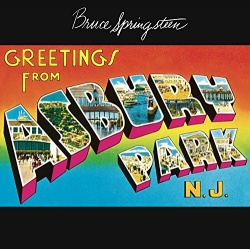
Greetings from Asbury Park, N.J.

In preparing his debut LP, Greetings from Asbury Park, N.J., Springsteen immediately rehired most of his backup band, Federici, Lopez, Sancious, Tallent, and Clemons. (Van Zandt, on tour with the Dovells, was mostly unavailable.) The album went unnoticed upon its initial release in January 1973 (although Manfred Mann's Earth Band would turn its lead-off track, "Blinded by the Light," into a number one hit four years later, and the LP itself has since gone double platinum). The Wild, the Innocent & the E Street Shuffle (September 1973) also failed to sell despite some rave reviews. (It too has gone double platinum.) The following year, Springsteen revised his backup group -- now dubbed the E Street Band -- as Lopez and Sancious left, and Max Weinberg (drums) and Roy Bittan (piano) joined, and in 1975, Van Zandt returned to the group. With this unit he toured extensively while working on the LP that represented his last chance with Columbia. By the time Born to Run (August 1975) was released, the critics and a significant cult audience were with him, and the title song became a Top 40 hit while the album reached the Top Ten, going on to sell six million copies.
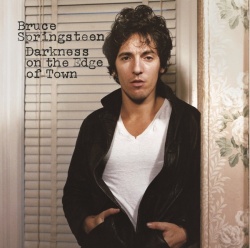
Darkness on the Edge of Town

Despite this breakthrough, Springsteen's momentum was broken by a legal dispute, as he split from Appel and brought in Jon Landau (a rock critic who had famously called him the "rock & roll future" in a 1974 concert review) as his new manager. The legal issues weren't resolved until 1977, during which time Springsteen was unable to record. (One beneficiary of this problem was Patti Smith, to whom Springsteen gave the composition "Because the Night," which, with some lyrical revisions by her, became her only Top 40 hit in the spring of 1978.) He finally returned in June 1978 with Darkness on the Edge of Town. By then, he had to rebuild his career. Record labels had recruited their own versions of the Springsteen "heartland rock" sound, in such similar artists as Bob Seger & the Silver Bullet Band (who actually preceded Springsteen but achieved national recognition in his wake), Johnny Cougar (aka John Mellencamp), Tom Petty & the Heartbreakers, Meat Loaf, Eddie Money, and even fellow Jersey Shore residents Southside Johnny & the Asbury Jukes, to name only some of the more successful ones. At the same time, the punk/new wave trend had become the new focus of critical devotion, making Springsteen seem unfashionable. Notwithstanding these challenges, Darkness earned its share of good reviews and achieved Top Ten status, selling three million copies as the single "Prove It All Night" hit the Top 40. (In early 1979, the Pointer Sisters took Springsteen's composition "Fire" into the Top Ten.)
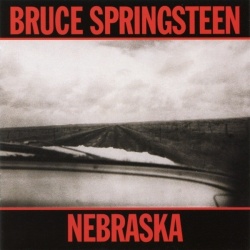
Nebraska

Springsteen fully consolidated his status with his next album, the two-LP set The River (October 1980), which hit number one, sold five million copies, and spawned the Top Ten hit "Hungry Heart" and the Top 40 hit "Fade Away." (In 1981-1982, Gary U.S. Bonds reached the Top 40 with two Springsteen compositions, "This Little Girl" and "Out of Work.") But having finally topped the charts, Springsteen experimented on his next album, preferring the demo recordings of the songs he had made for Nebraska (September 1982) to full-band studio versions, especially given the dark subject matter of his lyrics. The stark LP nevertheless hit the Top Ten and sold a million copies without benefit of a hit single or a promotional tour. (Van Zandt amicably left the E Street Band for a solo career at this point and was replaced by Nils Lofgren.)
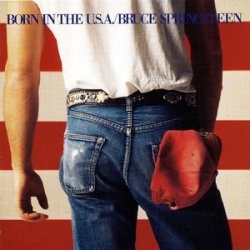
Born in the U.S.A.

But then came Born in the U.S.A. (June 1984) and a two-year international tour. The album hit number one, threw off seven Top Ten hits ("Dancing in the Dark," which earned Springsteen his first Grammy Award for Best Male Rock Vocal Performance, "Cover Me," "Born in the U.S.A.," "I'm on Fire," "Glory Days," "I'm Goin' Down," and "My Hometown"), and sold 15 million copies, putting Springsteen in the pop heavens with Michael Jackson and Prince. For his next album, he finally exploited his reputation as a live performer by releasing the five-LP/three-CD box set Bruce Springsteen & the E Street Band Live/1975-85 (November 1986), which topped the charts, was certified platinum 13 times, and spawned a Top Ten hit in a cover of Edwin Starr's "War." (In March 1987, "the Barbusters" -- actually Joan Jett & the Blackhearts, took Springsteen's composition "Light of Day," written for the movie of the same name, into the Top 40.)
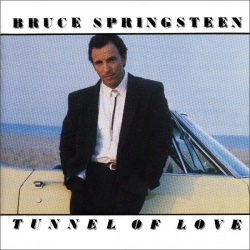
Tunnel of Love

Characteristically, Springsteen returned to studio work with a more introverted effort, Tunnel of Love (October 1987), which presaged his 1989 divorce from his first wife, actress Julianne Phillips. (He married a second time, to singer/songwriter/guitarist Patti Scialfa, who had joined the E Street Band as a backup vocalist in 1984.) The album was another number one hit, selling three million copies and producing two Top Ten singles, "Brilliant Disguise" and the title song, as well as the Top 40 hit "One Step Up." The album earned him a second male rock vocal Grammy. (In the spring of 1988, Natalie Cole covered the Springsteen B-side "Pink Cadillac" for a Top Ten hit.)
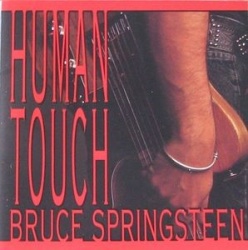
Human Touch

Springsteen retreated from public view in the late '80s, breaking up the E Street Band in November 1989. He returned to action in March 1992 with a new backup band, simultaneously releasing two albums, Human Touch and Lucky Town, which entered the charts at numbers two and three, respectively, each going platinum. A double-sided single combining "Human Touch" and "Better Days" was a Top 40 hit. Of course, this was a relative fall-off from the commercial heights of the mid-'80s, but Springsteen was undeterred. He next contributed the moody ballad "Streets of Philadelphia" to the soundtrack of Philadelphia, film director Jonathan Demme's 1993 depiction of a lawyer fighting an unjust termination for AIDS. The recording became a Top Ten hit, and the song went on to win Springsteen four Grammys (Song of the Year, Best Rock Song, best song written for a motion picture or television, and another for male rock vocal) and the Academy Award for best song.
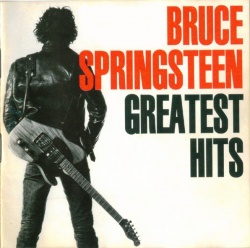
Greatest Hits

In early 1995, Springsteen reconvened the E Street Band to record a few new tracks for his Greatest Hits (February 1995). The album topped the charts and sold four million copies, with one of the new songs, "Secret Garden," eventually reaching the Top 40. Despite this success, Springsteen resisted the temptation to reunite with the E Street Band on an ongoing basis at this point, instead recording another low-key, downcast, near-acoustic effort in the style of Nebraska, The Ghost of Tom Joad (November 1995), and embarking on a solo tour to promote it. The LP won a Grammy for best contemporary folk album, but it missed the Top Ten and only went gold.
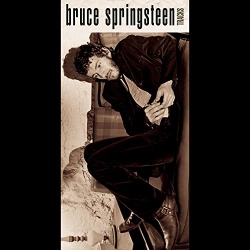
Tracks

A much more prolific songwriter and recording artist than what was reflected in his legitimately released discography, Springsteen went into his vault of unreleased material and assembled the four-CD box set Tracks (November 1998), which went platinum. Whether inspired by the playing he heard on those recordings, bowing to constant fan pressure, or simply recognizing the musicians with whom he had made his most successful music, Springsteen finally reunited the E Street Band in 1999, beginning with a performance at his induction into the Rock & Roll Hall of Fame. All the members from the 1974-1989 edition of the group returned. (Characteristically, Springsteen sidestepped the question of whether to use Van Zandt or Lofgren in the guitar position by rehiring both of them.) They embarked on a world tour that lasted until mid-2000, its final dates resulting in the album Live in New York City, which hit the Top Ten and sold a million copies.
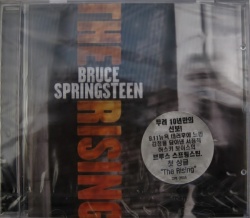
The Rising

Springsteen's writing process in coming up with a new rock album to be recorded with members of the E Street Band was given greater impetus in the wake of the terrorist attacks of September 11, 2001, and the resulting disc, The Rising (July 2002), contained songs that reflected on the tragedy. The album hit number one and sold two million copies, winning the Grammy for rock album, and the title song won for rock song and male rock vocal. Following another lengthy tour with the E Street Band, Springsteen again returned to the style and mood of Nebraska on another solo recording, Devils & Dust (April 2005), taking to the road alone to promote it. The album hit number one and went gold, winning a Grammy for Best Solo Rock Vocal Performance. One year later, Springsteen unveiled another new musical approach when he presented We Shall Overcome: The Seeger Sessions (April 2006), an album on which he played new arrangements of folk songs associated with Pete Seeger, played by a specially assembled Sessions Band. The album reached the Top Ten and went gold as Springsteen toured with the group. It also won the Grammy for Best Traditional Folk Album. The tour led to a concert recording, Live in Dublin (June 2007), which reached the Top 40.
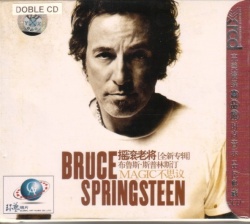
Magic

Once again, Springsteen recorded a new rock album, Magic (October 2007), as a precursor to re-forming the E Street Band and going out on another long tour. The album hit number one and went platinum, with the song "Radio Nowhere" earning Grammys for rock song and solo rock vocal. (Another track from the album, "Girls in Their Summer Clothes," won the rock song Grammy the following year.) Sadly, longtime E Street Band keyboardist Danny Federici succumbed to a three-year battle with melanoma on April 17, 2008, his death causing the first irrevocable change in the group's personnel (saxophonist Clarence Clemons would die on June 18, 2011 due to complications from a stroke). Federici was replaced by Charles Giordano, who had played with Springsteen previously in the Sessions Band.
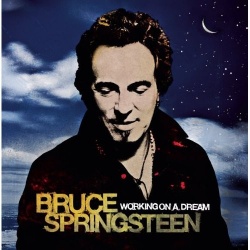
Working on a Dream

Springsteen finished the tour in 2008 and held several additional shows in support of Senator Barack Obama, whose presidential campaign had kicked into hyperdrive earlier that year. While playing an Obama rally in early November, Springsteen debuted material from his forthcoming album, Working on a Dream, whose tracks had been recorded with the E Street Band during breaks in the group's previous tour. The resulting album, which was the last to feature contributions from Federici (as well as his son, Jason), arrived on January 27, 2009, one week after Obama's historic inauguration. It immediately hit number one, Springsteen's ninth album to top the charts over a period of three decades, and it went on to go gold and win him another Grammy for solo rock vocal. In February, Springsteen and the E Street Band provided the half-time entertainment at Super Bowl XLIII. The group's tour, which featured full-length performances of some of Springsteen's classic albums at selected shows, ran through November 22, 2009. In December, the 60-year-old was ranked fourth among the top touring acts of the first decade of the 21st century, behind only the Rolling Stones, U2, and Madonna. The same month he was a recipient of the Kennedy Center Honors.
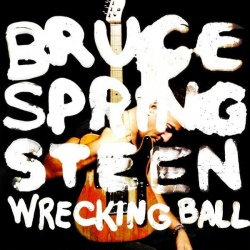
Wrecking Ball

Springsteen's 2010 was devoted to a revival of Darkness on the Edge of Town, with the 1978 masterpiece receiving an expanded box set called The Promise: The Making of Darkness on the Edge of Town; the set contained a feature-length documentary and a double-disc set of outtakes that was also available separately. As Springsteen began work on a studio album produced by Ron Aniello, who'd previously worked with Patti Scialfa, Clarence Clemons died. Clemons' last recorded solo appeared on "Land of Hope and Dreams," one of many politically charged songs on the resulting album, Wrecking Ball. Supported by a major media blitz that included a showcase week of Springsteen covers on Late Night with Jimmy Fallon and the Boss delivering a keynote address at South by Southwest, Wrecking Ball appeared the first week of March 2012. Before the end of that month, he embarked on a mammoth world tour to promote the album, on which he eventually took in 26 countries over the course of 18 months.
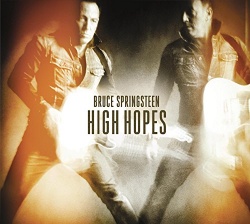
High Hopes

Late in 2013, it was announced that the E Street Band would receive a belated induction into the Rock & Roll Hall of Fame in early 2014. Prior to the induction ceremony came High Hopes, Springsteen's 18th studio album. Inspired in part by Rage Against the Machine guitarist Tom Morello, who had temporarily replaced Van Zandt for the last six months of the Wrecking Ball tour and also played on the album, High Hopes was a collection of covers, reinterpretations of old songs, and leftovers; it appeared in mid-January 2014 and easily reached number one on the album charts. He toured with the E Street Band through the late spring, and also issued the EP American Beauty, which consisted of four unreleased songs from the High Hopes sessions.
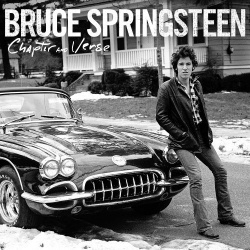
Chapter & Verse

In late 2015, Springsteen released another audio/video box set offering an in-depth look at one of his classic albums. The Ties That Bind: The River Collection offered a remastered version of Springsteen's 1980 album, along with an expansive disc of outtakes, an early single-LP version of the album Springsteen pulled prior to release, an original documentary on the making of The River, and a complete concert filmed in Tempe, Arizona, in 1980. In the fall of 2016, Springsteen released a memoir entitled Born to Run, which was accompanied by a career-spanning collection called Chapter & Verse that he compiled himself.

Shortly after publishing his memoir, Springsteen adapted the book for the stage in the guise of the Broadway production Springsteen on Broadway. Opening in October 2017, the show ran until December 2018. Upon its conclusion, the production was captured as a film and a double-disc album; the record debuted at 11 on Billboard's Top 200.
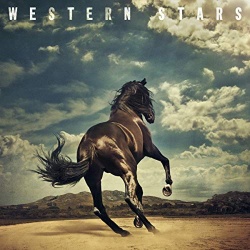
Western Stars

In June 2019, Springsteen returned with his first studio album of original material in five years. Titled Western Stars, the solo record was produced by Aniello and featured the lead single "Hello Sunshine."

— William Ruhlmann

✍️ Record Review

Bruce Springsteen's ambition is his blessing and his curse. He's always believed that rock & roll is a music that can express people's deepest hopes and dreams and change their lives, and his best work communicates that brilliantly. But Springsteen often seems to doubt his own abilities and struggles under the weight of his own (high) standards, and many of Springsteen's best albums were painstakingly created as he spent months in the studio, searching for the right set of songs and performances that would tell the larger story in his mind. Springsteen is too smart to believe you can will a masterpiece into creation, but he does have a work ethic that suggests nothing worthwhile comes without sweat and sore muscles, and the man who regularly plays energetic three-hour shows has never hesitated to do whatever it takes to get the details just right in the studio, even if the desire is to create something that sounds explosive and spontaneous. After taking his early urban folk tales of cars and girls as far as he could on Born to Run, Springsteen took a long, hard look at the lives of those same kids, now saddled with adult responsibilities and realizing that the American Dream was increasingly out of their grasp, on 1978's Darkness on the Edge of Town.

With 1980's The River, Springsteen sought to expand on those themes while also offering more of the tough, bar-band rock that was his trademark (and often conspicuous in its absence on Darkness), and by the time it was released it had swelled into Springsteen's first two-LP set. After presenting his fans with a grand-scale study of how Darkness on the Edge of Town came into being on the 2010 box set The Promise, Springsteen does the same for The River with The Ties That Bind: The River Collection, which features a newly remastered edition of the original album along with a bonus disc of outtakes (most previously unreleased) and an early single-LP version of the album that Springsteen opted not to release because it failed to tell the story he had envisioned. The short version sounds like the rough draft that it is, though it also includes several songs that didn't appear on the longer final version ("Loose Ends" and "To Be True" in particular are superb songs that simply didn't fit the flow of the album), as well as different versions of a few tracks that do ("The Ties That Bind" contains different lyrics, while "Stolen Car" and "You Can Look [But You Better Not Touch]" feature different arrangements). And the outtakes disc offers 22 variations on the album's themes that point to any number of directions the album could have gone, and if nothing else it says a great deal about Springsteen that he had enough good songs that numbers as strong as "Party Lights," "Roulette," "Where the Bands Are," and "Chain Lightning" could end up on the shelf.

The Ties That Bind also includes a documentary (on DVD or Blu-ray) on the making of the album, as well as a full concert filmed in 1980 that finds Springsteen & the E Street Band in incendiary form. The Ties That Bind: The River Collection, like a high-profile DVD release of the 2000s, is more about the bonus features than the main feature, but the extras lend an invaluable perspective to one of the most important works in Springsteen's catalog, and this set makes it possible to imagine the many chapters that could have been added or removed from the album while still telling the same powerful story, as well as documenting the thought and effort Springsteen put into the process.

—Amazon.com


'The Ties That Bind: The River Collection' is a comprehensive look at Bruce Springsteen's 'The River' era, one of the most pivotal periods of time in his career. The set contains 52 tracks on 4 CDs with a wealth of unreleased material, and 4 hours of never-before-seen video on 3 DVDs. It is comprised of the original 'The River' double album as released in 1980; the first official release of 'The River: Single Album;' a CD of 1979/80 studio outtakes; a two-DVD film of never-released, newly edited multi-camera footage from Springsteen's famed 1980 show in Tempe, AZ, long rumored but never-before-seen; rare tour rehearsal footage; a brand new documentary "The Ties That Bind" about 'The River;' and a coffee table book of 200 rare or previously unseen photos and memorabilia with a new essay by Mikal Gilmore.

'The River,' was originally released on October 17, 1980 as a double album and reached #1 on the U.S. Billboard 200 chart. 'The River: Single Album' is the 10-track album that Springsteen recorded in 1979 as a follow up to 1978's 'Darkness On The Edge Of Town' but never released. The fourth CD on the box set is 'The River: Outtakes,' which spans the entire 'The River' sessions in 1979 and 1980. Eleven songs are rarities that have never been released before, and for the most part are completely unheard and unknown even to fans, who have long considered Springsteen's outtakes to be treasured secrets.

"The Ties That Bind," on one DVD, is a brand new 60-minute documentary that features an intimate interview with Springsteen as he reflects on the tumultuous, extended period writing and recording 'The River.' The film transitions between Springsteen telling the stories behind the music and illustrating them with solo acoustic guitar performances — interspersed with period concert footage and rare photos of Bruce and the band in and out of the studio. The final video component is "Bruce Springsteen & The E Street Band: The River Tour, Tempe 1980," a new film produced from footage professionally filmed in 1980 using four cameras and recorded in multitrack audio. The film features 24 songs 2 hours, 40 minutes on 2 DVDs from Springsteen s November 5, 1980 concert at Arizona State University in Tempe, AZ. Widely regarded as one of Springsteen s finest performances, this intense show features early live versions of over half of 'The River' songs. Also included is 20 minutes of footage from the late September, 1980 River Tour rehearsals held in Lititz, PA, showing Springsteen and The E Street Band working through live arrangements of what was then unreleased material from the upcoming album.

"The Ties That Bind: The River Collection is packaged in a 10" x 12" box with a hardcover 148-page coffee table book containing 200 studio and live photographs most of which have never been seen before plus pages from Springsteen's notebooks, single covers, assets/images and outtakes from the original album package, and other memorabilia documenting the album. Liner notes include a new essay from journalist Mikal Gilmore, the original Rolling Stone album review from 1980, and Springsteen's updated comments about the album from the 1998 "Songs" book.


When Bruce Springsteen released The Promise back in 2010, it was a document of what could have been. Although most of the album's songs were recorded during the same sessions that birthed Darkness On the Edge of Town, they contrasted wildly in tone — where Darkness was steeped in working class angst, The Promise had a more romantic outlook. Its arrangements were lusher and its characters found easier escape from their blue-collar confinements, their gazes turned upward to the stars instead of towards the factories pumping out smog below. Even the handful of tunes that popped up on both records received dramatically different treatments. Most notably, The Promise's version of "Racing In the Street" touted a higher key and jaunty fiddle from David Lindley, both of which made it more uplifting than the more funereal original. Likewise, "Factory" was turned from a dour going-to-work song into a more hopeful getting-off-work song.When compiling the final product, Springsteen had a wealth of material to choose from, and for one reason or another β€” perhaps because he was getting older and had already pushed romanticism to its limit on Born To Run — he chose to explore the shadows. It's no mistake that the title of Darkness On the Edge of Town sounds so much more foreboding than The Promise. It's no mistake that its songs are, for the most part, heavier and more bitter.The Ties That Bind has a similar background. Well, almost. Originally submitted to Columbia Records as a single disc of 10 songs, it got expanded to a whopping 20 after The Boss decided he wanted the album to have more depth and variety. Thus, The River was born, a heartland rock buffet with everything from humorous bar jams ("Cadillac Ranch", "I'm a Rocker", "Ramrod") to soul-crushing folk ballads ("Independence Day", "Drive All Night", the title track) on the menu. What's more is that, even as an 83-minute double album, The River had more than twice as many songs that didn't make the cut.And that's where The Ties That Bind starts to differ from The Promise, despite them both being companion pieces to already existing albums. Since Springsteen and The E Street Band plowed through the former's sessions with a singular aesthetic in mind (American realism where the stakes range from trivial to life-threatening) as opposed to two different sides of the same coin, the collection doesn't feel like a bizarro version of The River as much as an extension of it. A title like …And Now, More of The River would have been just as appropriate.Fortunately, The River — and thus The Ties That Bind — happens to be a damn near perfect album. This was in Springsteen's heyday of sketching crucially unremarkable (i.e., realistic) characters to explore themes larger than themselves (and, for a time, himself), not the other way around. "Stolen Car" does indeed feature a car thief, but it's really about marital entropy. On The Ties That Bind, several of the River outtakes function as its sister songs, also doling out loss through low-level criminal activity: The most obvious is a more boardwalk-friendly "Stolen Car" (Danny Federici steps out front-and-center with his accordion) before both "The Man Who Got Away" and "Roulette" open on a turd on the run — one who's flying solo and another who's been forced to take his wife and kids with him. There are also everyday Joes and Janes who get caught up in crime even when they're not looking for it, such as the guy who sees his girlfriend gunned down by gang crossfire in "Stray Bullet". As over-the-top as that sounds, the band keeps pulp at bay with Steven Van Zandt's ripped-open background falsetto and a rare bit of soprano sax from Clarence Clemons.Of course, The River isn't solely about criminals and neither is its single-disc counterpart or its mammoth compilation of outtakes. And since all three of them are included here in order — The River on discs one and two, The Ties That Bind on disc three, then all of the outtakes (first the unreleased ones, then those already heard on 1998's Tracks box set and various singles) on disc four — you can continue playing the mirror game with all of the varying subject matter and musical formats. Weekend warriors get their due in "Out In the Street" (The River), "Cindy" (The Ties That Bind), and the fret-jumping lead single "Meet Me In the City" (the outtakes). Elsewhere, E Street flaunts its bar band cred in the dispensable but fun as hell "Sherry Darling" (The River), "Chain Lightning", and "Paradise By the "C"" (both on the outtakes), all of them shaken loose by group vocals, handclaps, and beer-soaked chatter. And since every last bit of music — serious and silly alike — places the same high currency on hooks and furious meat-and-potatoes rock, you could pick any 10 songs out of the box set's 52 and have one hell of an LP. Even Springsteen himself has confessed he's not sure why something as pummeling as "Roulette" was scrapped in favor of a throwaway track like "Crush On You". The River Collection isn't a glimpse of what could have been β€” it's raw proof that The River sessions produced too many good songs for one album (even a double album) to contain.

— Dan Caffrey


The River doesn't flow—it floods. Bruce Springsteen's fifth album gushes forth with the fury of a burst dam, delivering torrents of despair, inspiration, heartbreak, and joy. Coming after the deliberate twin masterpieces of Born to Run and Darkness on the Edge of Town, records epic in scope but precise in execution, The River not only appears to be a mess but embodies the classic definition of a double album: it seems to be a clearinghouse for every song Bruce Springsteen had at the ready in 1980. The Ties That Bind: The River Collection shows just how wrong that assumption is. Expanding the original 20-song double album to a 4xCD set supplemented with video, it laughs at the notion that the original album was much too much by underscoring exactly how Springsteen intended the album to overwhelm.

Initially, Springsteen planned to follow 1978's Darkness on the Edge of Town with an album called The Ties That Bind but he withdrew the record in the fall of 1979, believing that it wasn't "big enough." This claim came from the stage during a 2009 performance of The River at Madison Square Garden, with Bruce going on to say, "I wanted to capture the themes that I'd been writing about on Darkness. I wanted to keep those characters with me and at the same time added the music that made our live shows so much fun and enjoyable for our audience." On this box, the scrapped The Ties That Bind gets an official airing as the third disc on the set—here it's dubbed The River [Single Album]—and it does indeed play like a truncated, miniature version of The River, containing in its 10 tracks seven of the double-album's songs, along with two alternate versions of tunes that wound up on the released record. What's striking is what's absent: shorn of its party songs, the record feels gloomy and haunted—even "You Can Look (But You Better Not Touch)" in a lonesome Sun rockabilly incarnation feels like a transmission from the lonely black of night. It reiterates many of the themes of Darkness, only without aggression, fury, or precision, the very things that give that record a lift that fights against its undercurrents of hopelessness.

Surely recognizing this deficit, Springsteen spent roughly another year in the studio, reviving old songs and writing new ones, arriving at full-blown, completed recordings of most of these tunes, then picking and choosing from his surplus to create the final album. The result was enough material for another double album, presented here as The Ties That Bind, a collection that runs two songs longer the 1980 double-LP but winds up six minutes shorter. This is an absurd amount of shelved material—and, even with this abundance, there are a handful of bootlegged cuts that didn't make the grade. There's a lot of unheard music here, even if some tracks are colored with new Bruce vocals, a slightly sour grace-note that is only notable upon close inspection.

Listening through the box, it's hard not to be struck by Springsteen's labor-intensive creative method. He knew the broad outline of what he wanted to achieve, so he kept tweaking his material in the studio, rearranging and recording until he found just the right emotion. If The Cutting Edge 1965–1966 proves how Bob Dylan sought to capture the lightning of a live performance, Springsteen always is seduced by the illusion of a record: sure, he's invigorated by live performance—and the Tempe concert included here is tremendous, the E-Street Band at the peak of their power—but he sculpts his albums out of tracks that are powerful as recordings, not simply songs.

This is especially true of The River, which Bruce loaded up with the purest, hardest, and happiest rock'n'roll the E-Street Band ever cut in the studio. "She's the One" pulsated to a beat borrowed from Bo Diddley and Darkness surged with desperate passion, but Bruce's first four records rarely touched on the ecstatic joy that can be had from just making noise. The River is full of these moments ("Sherry Darling", "Crush on You", "I'm a Rocker", "Cadillac Ranch"), and some of the weightier items trade in this same sense of exuberance—a sense of desperation cuts against the grain of the sunny hook on "Hungry Heart", and "Two Hearts" spins headfirst into unfettered romanticism. But this music is so simple, so visceral, that it's often been tagged as throwaway, the detritus surrounding the haunting "The River", "The Price You Pay", and "Stolen Car".

Thing is, these throwaways give The River its cinematic scope. Some of the newer additions were cut from a familiar forlorn cloth ("Independence Day", the closing pair of "Drive All Night" and "Wreck on the Highway") while "Point Blank" and "Jackson Cage" split the difference between the celebration and sorrow. But the biggest distinction between The River and the original Ties That Bind is this full-on bash, funny and furious and entirely sincere in its worship of the sounds rocking frat houses and AM radio in a '60s that didn't belong to the Beatles. It's the Springsteen album that can easily slip onto any show on Little Steven's Underground Garage, and this party winds up providing an ideal counterpoint to the sweeter, sadder moments on The River.

Take the second side, which opens with "Hungry Heart"—Bruce's first genuine hit single, reaching number five on a combination of its hook and Springsteen's general momentum—then dwells upon the cinematic escape "Out in the Street" and serves up two breakneck rockers before settling into the dreaminess of "I Wanna Marry You" and the stark "The River", the latter two hitting harder due to the companions. Each side is structured similarly, with the last song tipping slightly toward melancholy, the cumulative effect suggesting there's no separating pleasure from the pain. It all comes at once and, depending on mood, The River either seems like the happiest or saddest of Bruce's records: in its mess lies a mirror that reflects the listener's state of mind.

The Ties That Bind illustrates this sprawl was no accident. Within these 22 rejects—some of them sneaking out as B-sides or on previous reissues, including the 1998 box Tracks and the bonus disc on 2003's The Essential Bruce Springsteen—Springsteen explores the same terrain as he does on The River: urban romance, accidental violence, working-man's blues, and restless nights. Like its parent, The Ties That Bind achieves a delicate balance between adult despair and adolescent freedom: he may dwell upon "Little White Lies" and "The Time That Never Was", but he also borrows a song title from Claudine Clark ("Party Lights") and tips a hat to Connie Francis' beach classic Where the Boys Are ("Where the Bands Are"). Enough great songs didn't make a cut that it's possible to cobble together a killer single album from the outtakes—one that would open with the breathless "Meet Me in the City" and contain the cloistered paranoia of "The Man Who Got Away", the blank desperation of "Roulette", the open-hearted "Ricky Wants a Man of Her Own" and "From Small (Big Things One Day Come)", a heightened Chuck Berry story song Bruce turned over to Dave Edmunds. But like the completed album, what resonates is the magnitude of the sprawl itself.

As they spill out, the songs play off each other, accentuating the sorrow or celebration heard in their predecessors. Combing through these outtakes, it quickly becomes clear how Springsteen, Van Zandt, and Jon Landau constructed each track to deliver its own specific visceral thrill and then culled through their finished product to find the cuts that fit their intended design. Some of these rejects rely on that headstrong old time rock'n'roll—"Living on the Edge of the World" bops along to its syncopated swing, "Paradise by the C" is a roadhouse jam highlighting Clarence Clemons—but others play like ripostes to the E-Street Band's peers: the live "Held Up Without a Gun" (which would later morph into the finished "You Can Look (But You Better Not Touch)") careens like Elvis Costello & the Attractions, the chiming guitars of "Take 'Em As They Come" seem like an answer to Tom Petty and the Heartbreakers, while "I Wanna Be With You" pulses to the Iron City rush of Joe Grushecky & the Houserockers.

Thirty-five years after the release of The River, it's easy to think of Bruce Springsteen as existing on a separate plane from such contemporary kindred spirits or perhaps as somebody who only belongs to part of a self-styled lineage that runs through Woody Guthrie and Bob Dylan. By adding The Times That Bind, both the scrapped '79 LP and this new double-disc collection of outtakes, to The River, this box highlights the plain, prosaic ways he belonged to his time. On these 52 songs, Springsteen sings about gas shortages, cold beer, unemployment agencies, busted dreams, and Burt Reynolds, fleeting images of a blue collar America that unknowingly was entering its decay but these words are married to the sound of a working band that knows it has to work, aware that it has to have songs to fuel those marathon three hour shows.

Springsteen never really let these straight-up rockers be part of his records again—maybe on Born in the U.S.A., but both "Darlington County" and "Working on the Highway" end in tears—but he also never quite worked the same way again, producing such a ridiculous surplus of finished material as he set out on his quest for bigger, greater things. The River brought Bruce to those heights, giving him his first number one album and Top 10 single, but it's hard not to think of it as not a beginning but an end, the last record where he and the E-Street Band were not the biggest band in the land but merely the best. In that light, piling on a ton of unreleased music, all in the same spirit and feel as the final album and nearly as good as what made the cut, feels like a gift. And for those who may think four CDs and three DVDs are too much, consider this: for an album that is all about contradictions, excess and mess, more of everything is most certainly a good thing.

— Stephen Thomas Erlewine, Pitchfork