๐ŸŽต

Live At The Fillmore

๐Ÿท๏ธ Rock ๐Ÿ“… 1972 ๐Ÿ’ฟ CD โญ ****

Field
Rock
Recorded
1972
Label
Polydor
Pressing
Am
Rating
****
Discs
1
Media
CD
Bought
10-Dec-1994
Cost
¤36.00

๐ŸŽถ Track Listing

6 tracks ยท 59:28
  1. 1 Got To Get Better In A Little While 13:52
  2. 2 Why Does Love Got To Be So Sad? 14:49
  3. 3 Key To The Highway 6:25
  4. 4 Blues Power 10:31
  5. 5 Have You Ever Loved A Woman 8:17
  6. 6 Bottle Of Red Wine 5:34

๐Ÿ“œ Artist Biography

Derek & the Dominos was a group formed by guitarist/singer Eric Clapton (born Eric Patrick Clapp, March 30, 1945, Ripley, Surrey, England) with other former members of Delaney & Bonnie & Friends, in the spring of 1970. The rest of the lineup was Bobby Whitlock (b. 1948, Memphis, TN) (keyboards, vocals), Carl Radle (b. 1942, Oklahoma City, OK -- d. May 30, 1980) (bass), and Jim Gordon (b. 1945, Los Angeles) (drums). The group debuted at the Lyceum Ballroom in London on June 14 and undertook a summer tour of England. From late August to early October, they recorded the celebrated double album Layla and Other Assorted Love Songs (November 1970) with guitarist Duane Allman sitting in. They then returned to touring in England and the U.S., playing their final date on December 6.

The Layla album was successful in the U.S., where "Bell Bottom Blues" and the title song charted as singles in abbreviated versions, but it did not chart in the U.K. The Dominos reconvened to record a second album in May 1971, but split up without completing it. Clapton then retired from the music business, nursing a heroin addiction.
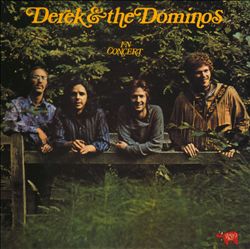
In Concert

In his absence, and in the wake of Allman's death in a motorcycle accident on October 29, 1971, the Dominos and Layla gained in stature. Re-released as a single at its full, seven-minute length in connection with the compilation album History of Eric Clapton (Atco 803) (March 1972), "Layla" hit the Top Ten in the U.S. and the U.K. in the summer of 1972. (It would return to the U.K. Top Ten in 1982.) A live album, Derek and the Dominos in Concert (January 1973), taken from the 1970 U.S. tour, was also a strong seller.
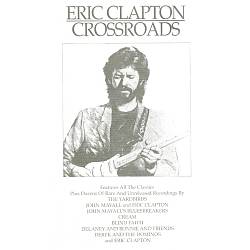
Crossroads

Time has only added to the renown of the group, which is now rated among Eric Clapton's most outstanding achievements. The 1988 Eric Clapton box set retrospective Crossroads featured material from the abortive second album sessions. The Layla Sessions was a 1990 box set expanding that album across three CDs/cassettes. Live at the Fillmore (1994) offered an expanded version of the In Concert album.

— William Ruhlmann

โœ๏ธ Record Review

In his liner notes, Anthony DeCurtis calls Live at the Fillmore "a digitally remixed and remastered version of the 1973 Derek and the Dominos double album In Concert, with five previously unreleased performances and two tracks that have only appeared on the four-CD Clapton retrospective, Crossroads." But this does not adequately describe the album. Live at the Fillmore is not exactly an expanded version of In Concert; it is a different album culled from the same concerts that were used to compile the earlier album. Live at the Fillmore contains six of the nine recordings originally released on In Concert, and three of its five previously unreleased performances are different recordings of songs also featured on In Concert -- "Why Does Love Got to Be So Sad?," "Tell the Truth," and "Let It Rain." The other two, "Nobody Knows You When You're Down and Out" and "Little Wing," have not been heard before in any concert version. Even when the same recordings are used on Live at the Fillmore as on In Concert, they have, as noted, been remixed and, as not noted, re-edited. In either form, Derek and the Dominos' October 1970 stand at the Fillmore East, a part of the group's only U.S. tour, finds them a looser aggregation than they seemed to be in the studio making their only album, Layla and Other Assorted Love Songs. A trio backing Eric Clapton, the Dominos leave the guitarist considerable room to solo on extended numbers, five of which run over ten minutes each. Clapton doesn't show consistent invention, but his playing is always directed, and he plays more blues than you can hear on any other Clapton live recording.

—William Ruhlmann