Jerry Jeff Walker is strongly associated with the progressive ("outlaw") country scene that centered around Austin, Texas in the 1970s and included such figures as Willie Nelson, Guy Clark, Billy Joe Shaver, the Lost Gonzo Band, Waylon Jennings, and Townes Van Zandt.
Ironically, however, Walker is not a native Texan. He was born Ronald Clyde Crosby in upstate New York and recorded his first several albums while living in New York City. He didn't move to Austin until 1971, but he's remained a major figure in the area ever since. Walker has been quoted as saying, "the first time I set foot in Texas, particularly in Austin, I knew I was home."
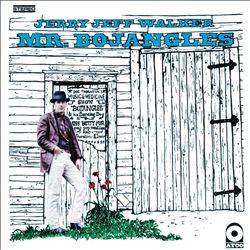
Walker first recorded with the folk-rock group Circus Maximus for Vanguard in 1967. The band split after its second album, and Walker signed with Atco and released his first solo album, Mr. Bojangles, in 1968. He is, for better or worse, best known as the writer of "Mr. Bojangles," an enduring pop classic he wrote after meeting former tap dancer and street singer Bill "Bojangles" Robinson in a New Orleans drunk tank. His version of "Bojangles" never hit it big, but the Nitty Gritty Dirt Band's rendition made the Top Ten of the pop charts in 1971.
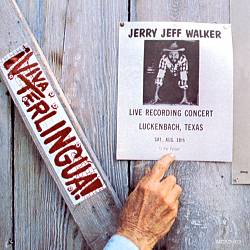
Viva TerlinguaIn 1972, Walker signed with Decca/MCA and released a self-titled album that included his version of Guy Clark's "L.A. Freeway," and "That Old Time Feeling," along with his own "Hill Country Rain," his reputation for being a "gypsy songman" found its roots in this outing. His best-known album from the period, however, is Viva Terlingua, which he recorded in 1973 in the tiny Texas town of Luckenbach with the Lost Gonzo Band. The album went gold, and was his biggest-selling album to date. His subsequent recordings of the '70s, particularly It's a Good Night for Singin', Ridin' High, and A Man Must Carry On solidified Walker's reputation for being not only a great songwriter, but a wonderful interpreter of the work of his peers, and for being the greatest example of the living embodiment of "cosmic cowboyism."
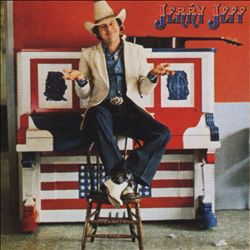
Walker was a hard drinker throughout much of his career (his friends called him "Jacky Jack"), and this reputation became part of his identity. He's since cleaned up his act -- in part thanks to his wife, Susan, whom he married in 1974 -- and he's continued to record steadily into the 2000s. He released a couple albums on Elektra/Asylum in the late '70s, but remained mostly with MCA until his 1982 album Cowjazz -- a record that became his last for any major label. The Elektra recordings, Jerry Jeff and Too Old to Change, were undervalued during their heyday, and have proven to be among his most adventurous and enduring recordings thanks to a Wounded Bird two-fer CD reissue in 2003. Walker, as evidenced by these recordings, was the only one of his peers -- with the possible exception of Willie Nelson -- who unrelentingly sought change and development in his sound. It didn't help with a country music industry completely hoodwinked by (sub)urban cowboyism and a pop market less receptive to organic American music than at any time in its history. In 1985, however, he showed the industry he could live without their help and released the first of a series of self-made cassettes, Gypsy Songman, many of which he sold via a mailing list that had grown to more than 40,000 strong. In 1987, Walker worked out a deal with Rykodisc, which released his CDs until 1996 when their partnership ended. He has since continued to market his material on Tried & True through his website and live shows. While Walker's Tried & True issues have not been as critically well-regarded as his earlier work, they are compelling, occasionally brilliant, always written from the perspective of where his gypsy songman is at this particular musical moment.
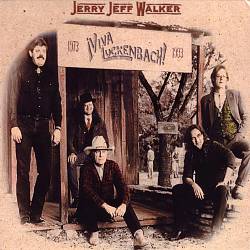
In 1991 and 1992, Walker hosted the weekly TV show The Texas Connection on TNN. In 1993, he returned to Luckenbach for an anniversary recording that became the album Viva Luckenbach! Walker's birthday is a major celebration in Austin every March, when he plays several shows in different local clubs and theaters. In 1999, he published an autobiography, Gypsy Songman, accompanied by an LP of the same name. Walker's 2003 album Jerry Jeff Jazz showcased him singing jazz-pop and swing standards with a small, tightly knit combo. It was followed in 2004 by a live album and video, The One and Only. The studio album Moon Child appeared in 2009, and included originals along with covers of John Denver's "Back Home Again," Jimmie Dale Gilmore's "Tonight I Think I'm Gonna Go Downtown," and Susanna Clark's "I'll Be Your San Antonio Rose" (the latter with guest vocals from Christine Albert).
— Kurt Wolff